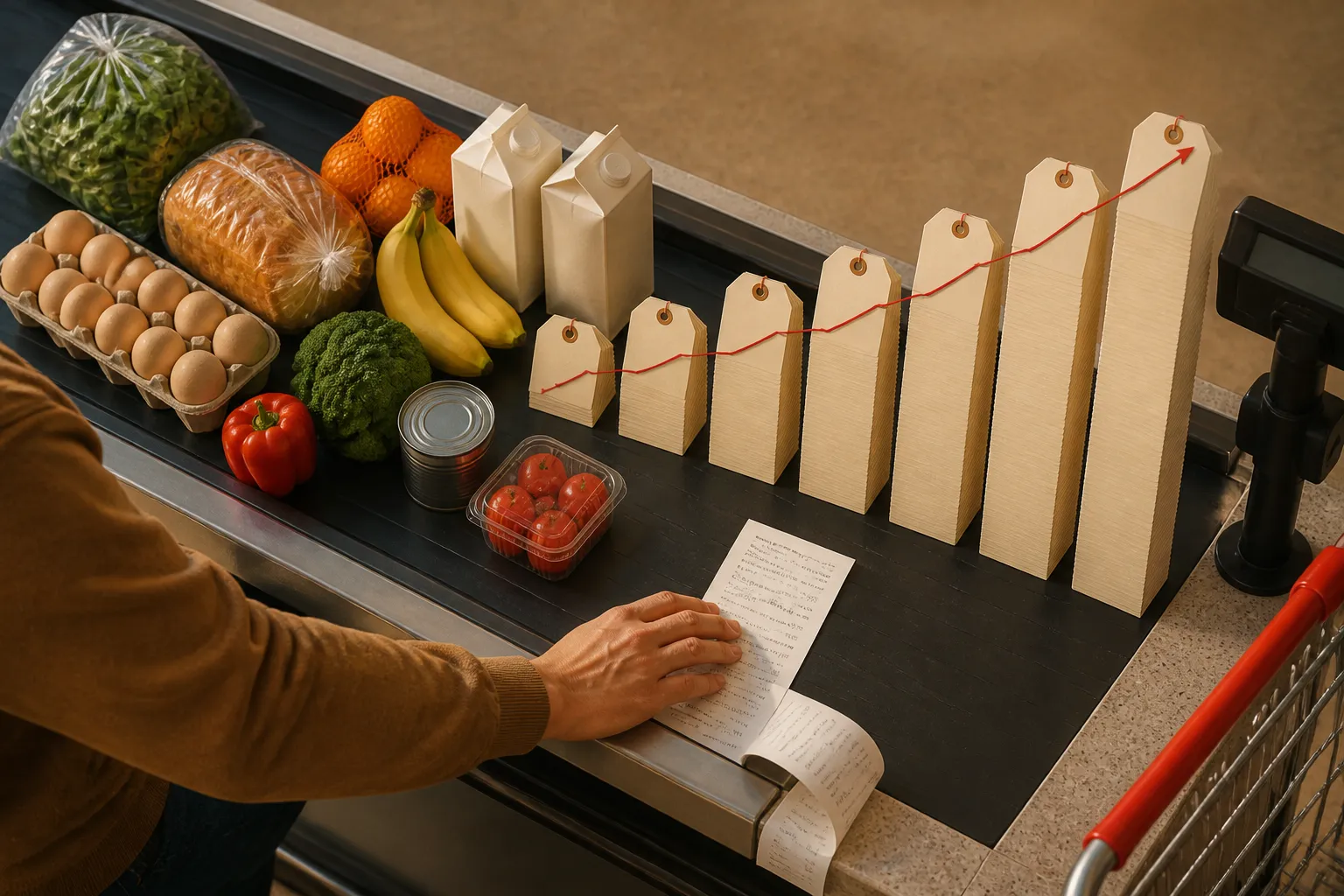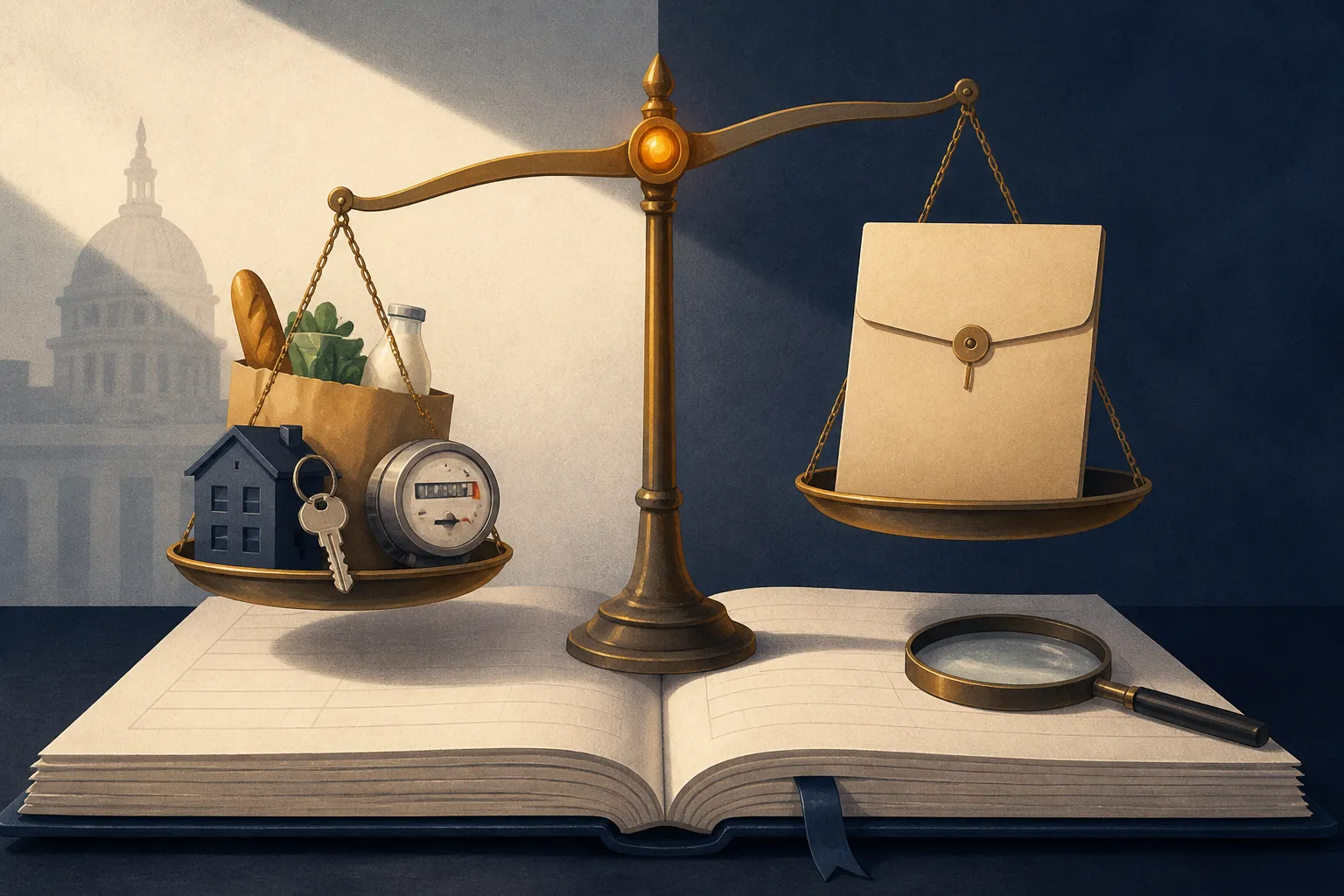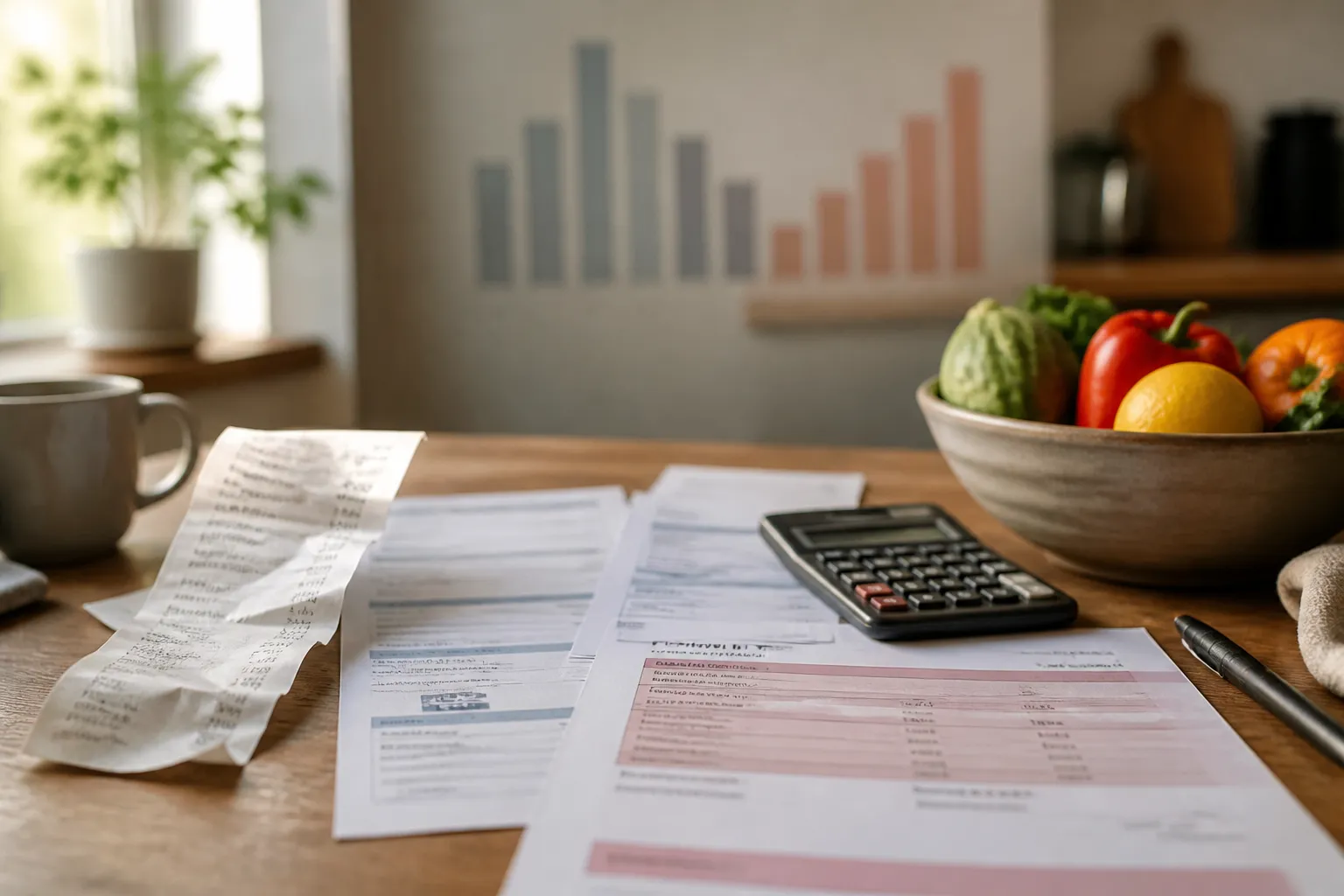

A grocery receipt that totals less than last month feels like a win. One receipt is not an economy. Deflation means prices fall broadly, across many goods and services, and sometimes wages fall with them.
Deflation Versus Disinflation
The two words sound alike, and people swap them all the time. They describe different things. Disinflation means inflation is slowing. Prices still rise, just at a gentler pace. Deflation means the price level itself is going down. The St. Louis Fed and the Cleveland Fed both draw this line in their explainers.
Think of a rent notice. Last year your landlord asked for 5% more. This year the notice asks for 2% more. That is disinflation, and you still pay more. Deflation would be a notice asking for less, with the same thing happening at the grocery store, the gas pump and the clothing aisle. The numbers here are only an illustration.
A sale on televisions or a dip in gasoline does not count. One category moving is a price change. A broad, lasting drop is deflation. Central banks treat it as something to guard against. The Bank of England and the European Central Bank both publish explainers on price stability, and the ECB describes stable prices as a core objective because they support the economy. In the US, the Federal Reserve states a longer-run inflation goal of 2%, which leaves some room above zero. Check federalreserve.gov for the current wording.
Why Falling Prices Can Hurt the Economy
Start with shopping habits. If a couch will cost less next month, waiting makes sense. If enough households wait, sales slow. Businesses then hire less and invest less. That weakens income, which weakens demand again. Brookings lays out this loop as one of its reasons to worry about deflation.
Wages are the next problem. Employers find it hard to cut dollar pay directly. In normal times, pay slips in real terms when raises come in below inflation. When prices are falling, that adjustment stops working. Brookings argues that in a deflationary economy, wage declines often require mass unemployment. So the cut can arrive as lost jobs and lost hours instead of a smaller paycheck.
Debt makes it sharper. A loan is fixed in dollars. If prices and paychecks shrink, the same payment takes a bigger bite of income. Borrowers feel this first. The chain looks like this:
- Buyers delay purchases, so demand softens.
- Firms hire and invest less in response.
- Pay cannot easily fall, so jobs are cut instead.
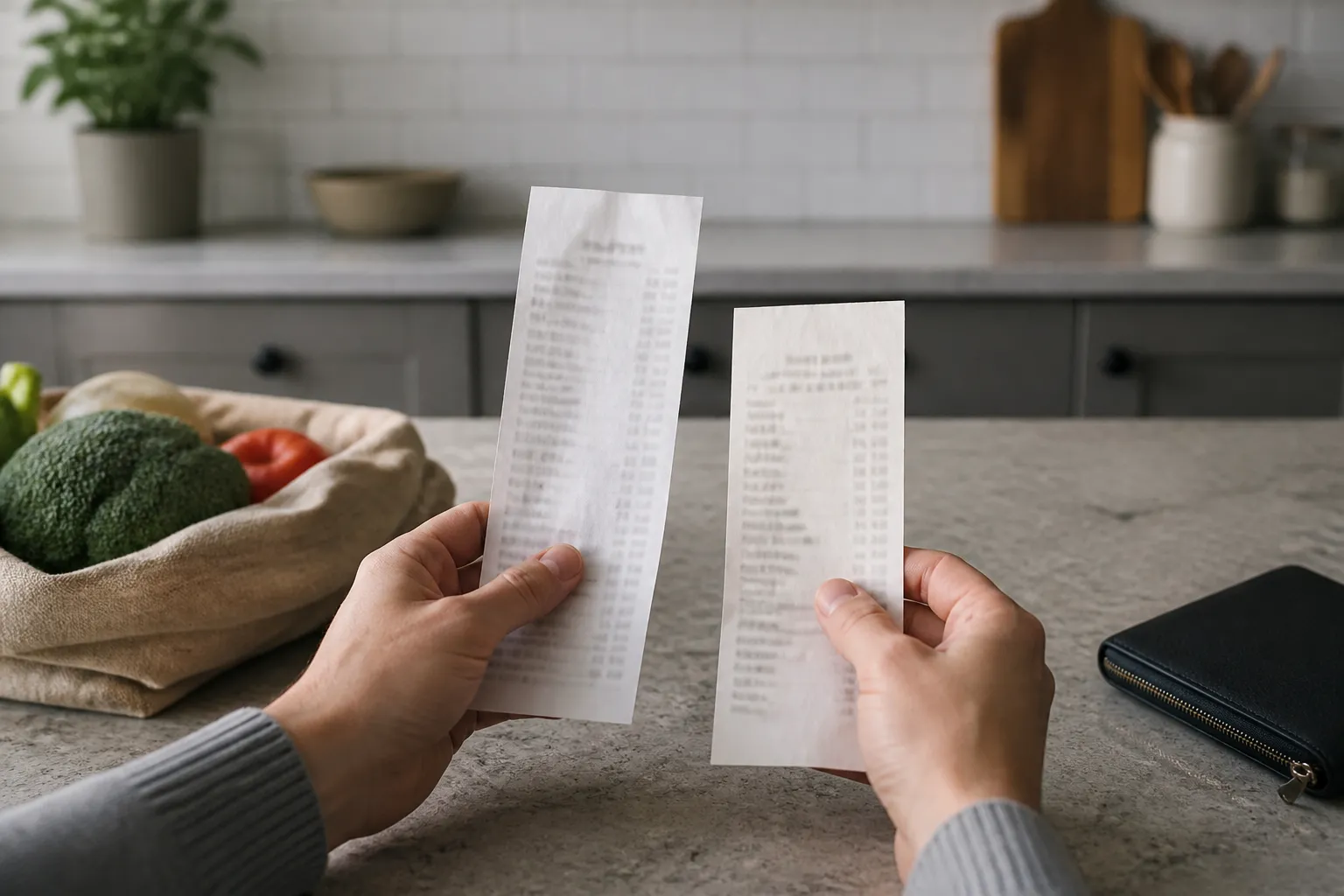
The debt side deserves its own look, because it is where the pain can last. Prices and wages fall, but the amount owed does not. Each dollar of debt then weighs more against what a household earns.
- The loan balance stays the same while income may shrink.
- Each payment takes a larger share of the paycheck.
- Households with the least slack have the least room to absorb it.
How to Check Whether Prices Are Really Falling
First, find out what is actually happening. Are prices falling, or is inflation just cooling? The Bureau of Labor Statistics publishes the Consumer Price Index. It tracks the average change over time in prices that urban consumers pay for a basket of goods and services. The CPI release lists the 12-month change for all items. If that figure is still positive, prices are still rising, even if the pace has slowed. That is disinflation. A sustained negative reading across many categories would point toward deflation.
A practical step: open the latest CPI release at bls.gov/cpi and look at two things. Read the 12-month change for all items, then scan the category table. If only energy or used cars are negative while most lines are positive, that is a narrow move. If most lines are drifting down together for several months, that is the pattern worth taking seriously. One soft month is not a trend.
Second, think about your own footing. Would falling prices touch your pay, your hours or your job security? A household with steady income and little debt sees a very different picture from one facing cut hours. The sources for this piece do not cover how deflation affects savings, cash, mortgages or card balances. Those questions need other official sources.
This article is educational only. It is not personal financial advice. For your own situation, check official sources or talk with a qualified professional.
Red Flags in the Good-News Story
The most common claim is that falling prices are automatically good for households. They are not. Lower prices help only if income holds. If wages drop or work disappears, a cheaper cart may not offset the strain.
Be wary of one price drop offered as proof. Fuel or electronics can fall for narrow reasons, such as a supply swing or a new product cycle. That tells you about one shelf, not the whole store.
Be wary, too, of confident forecasts. The sources here give no US deflation history and no account of how the Federal Reserve has responded. Anyone claiming to know where US prices are headed should point to the official data. The honest answer to the grocery receipt is usually this: it is a nice month, and the CPI will say whether it is more than that.