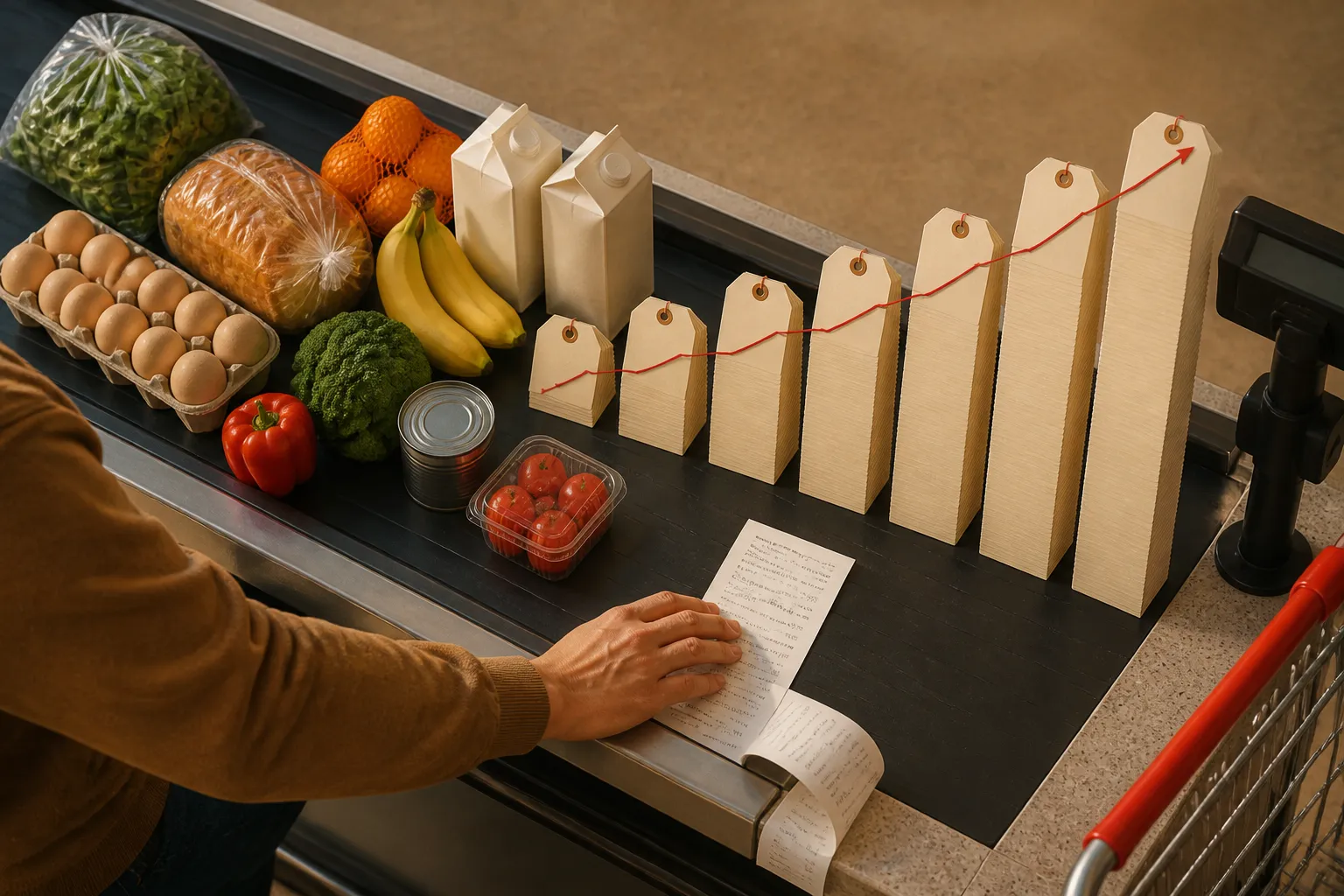










A producer price report can look alarming on a Tuesday and mean very little at the checkout on Saturday. The Producer Price Index (PPI) tracks what domestic producers receive for their output. The Consumer Price Index (CPI) tracks what urban shoppers pay at retail. Those are two different prices, and the gap between them is where most of the confusion lives.
What the Producer Price Index measures
The Bureau of Labor Statistics (BLS) describes the PPI as the average change in prices paid to domestic producers for their output. It covers nearly every industry in the goods-producing sector. Think of the price a processor gets for a pallet of canned beans, not the price on the shelf tag. The shelf tag also includes freight, labor, rent, and the store's margin.
That distinction matters when you read a headline. A rise in producer prices is a cost signal for businesses. It is not a bill that has already landed on a household. The BLS publishes methodology pages that compare the PPI with the CPI, and they are the best place to confirm definitions. Summaries often blur them.
How producer prices may point toward consumer prices
The logic is simple. If a business pays more for inputs, it may eventually charge more. Whether it does, how much, and how fast are open questions.
A 2022 Federal Reserve Bank of Richmond economic brief tested that idea. It found a correlation between upstream producer prices and the personal consumption expenditures (PCE) price index, the inflation measure the Federal Reserve prefers. In its statistical model, both the levels and the growth rates of producer prices had a statistically significant effect on consumer price inflation. The brief treated upstream prices as a signal for later consumer inflation.
The brief also said gaps between producer and consumer price indexes tend to normalize over time. Its reading was that upward pressure on consumer prices could persist given the data then. Those data showed 2021 producer prices rising at their fastest pace in decades and inflation readings, as of July 2022, at levels not seen in about four decades. That is a snapshot of one period. It does not tell us what is true now.
Food prices and forecasting
Food is where this link gets practical. The USDA's Economic Research Service (ERS) uses the latest BLS CPI and PPI data to forecast annual food price changes up to 18 months ahead. It updates the forecasts monthly, typically on the 25th. It covers the current year and, beginning each July, the following year.
For food, farm-level and wholesale PPIs get particular attention. They sit upstream of the grocery bill. Still, ERS cautions that forecasting is complicated by changes in the structure of food and agricultural economies. A jump at the farm gate may be absorbed by a retailer, delayed, or spread across many products. The source material here does not include the current ERS forecast numbers, so check the ERS page directly for the latest outlook.
Questions to ask when reading PPI news
Start with the basic one. Which price is this? What producers receive, or what consumers pay? Then ask about duration. A single month can be noise. The Richmond brief tied persistent gaps, not one-off moves, to ongoing pressure on consumer prices.
- Is the change one month or a sustained run?
- Does the CPI show a similar move?
- Does the ERS food outlook point the same way?
Disagreement among these measures is normal. It is one reason economists look at several indicators instead of one. A landlord's renewal notice, for comparison, reflects local rents and costs, and no national producer index will predict it.
Limits of what these sources show
The BLS pages available for this piece are mostly navigation and general description. They do not supply the full PPI methodology, index weights, a release schedule, or current PPI and CPI values. So they cannot establish where inflation is heading today.
They also do not explain how a PPI change would reach a household budget through specific goods, services, loans, or credit costs. They do not detail how the PCE index is built or how it differs from the CPI, and they do not say whether the 2022 Richmond Fed findings still hold. Readers planning their own finances should look to official consumer education, such as materials from the Consumer Financial Protection Bureau, or a qualified professional. This article is educational only.
For primary sources, see the BLS Producer Price Index home page, the ERS Food Price Outlook, and the Richmond Fed brief.