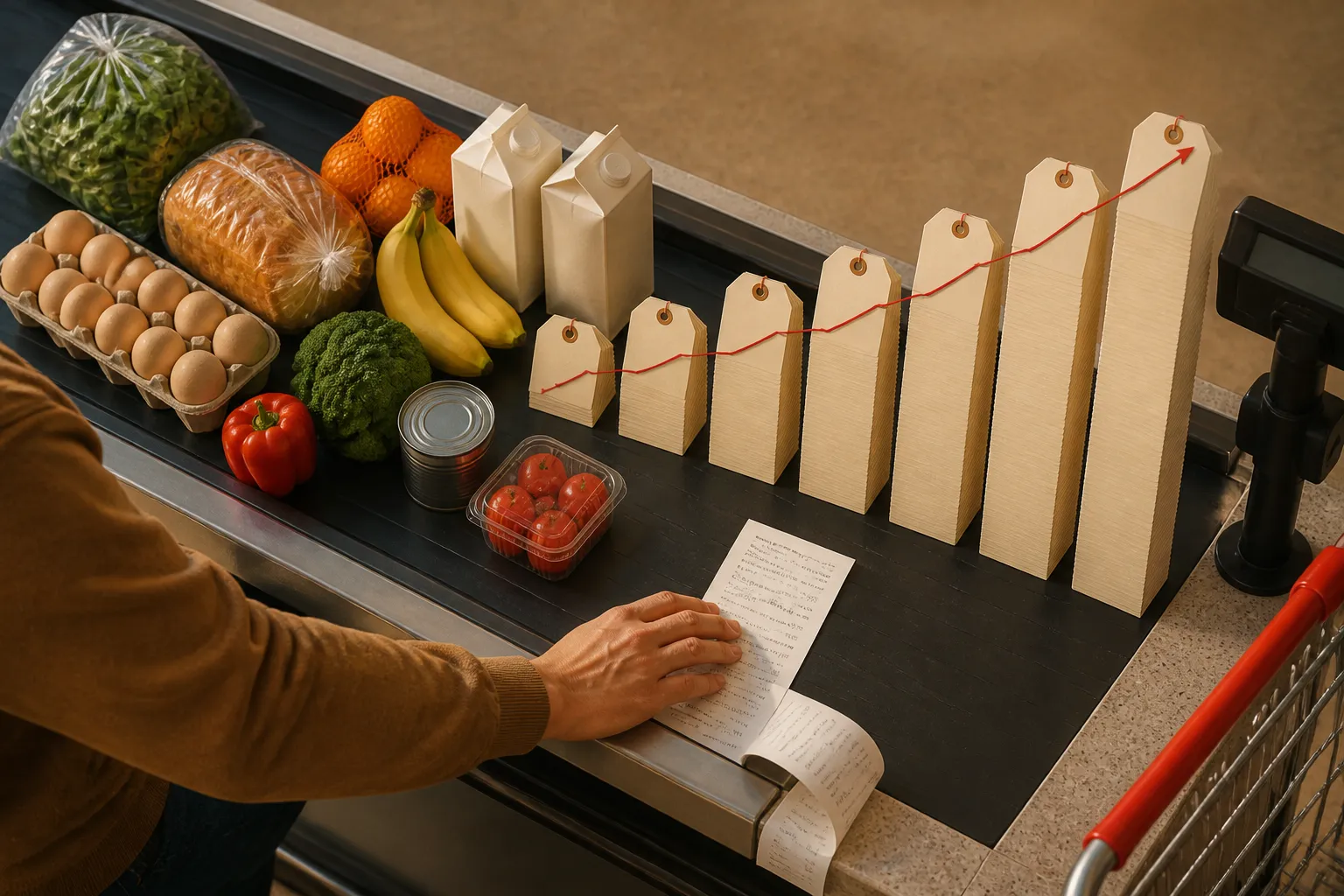











Start with two numbers. The Social Security Administration set the 2026 cost-of-living adjustment at 2.8%. CNBC reported that this would add about $56 a month for the average recipient. Now consider a second inflation gauge, the chained CPI. Public summaries say it has typically grown about 0.25 to 0.30 percentage points slower per year than the standard one. A quarter point sounds like a rounding error. But gaps like this compound, and any dollar amount tied to an index drifts with it.

What the chained CPI measures
The Chained Consumer Price Index for All Urban Consumers, or C-CPI-U, comes from the Bureau of Labor Statistics (BLS). It is a supplemental measure, built as an alternative to the standard Consumer Price Index. BLS first published it in August 2002, with December 1999 set equal to 100.
The idea is simple. Shoppers do not buy the same cart forever. If beef climbs and chicken holds steady, many households buy less beef. A measure that keeps pricing the old cart will overstate how much the household is squeezed. The chained index tries to follow the new cart. Economists call the error it avoids substitution bias, meaning the overstatement that comes from ignoring what people switch to.
The raw material is large. BLS collects prices for 211 categories of goods and services in 38 urban areas. The chained measure combines that price data with spending information. It uses a formula called a Törnqvist index, which averages weights from adjacent periods. BLS explains the method in its introduction to the chained CPI and in its FAQ on the C-CPI-U.
How it differs from the standard CPI
BLS publishes two main standard measures. The CPI-U covers all urban consumers. The CPI-W covers urban wage earners and clerical workers. Both use baskets that are updated on a schedule, not every month.
That does not mean the standard CPI ignores substitution. It captures some, but mostly when the basket is refreshed. The chained index adjusts its weights as relative prices move. Think of a rent notice versus a grocery receipt. Rent barely changes shape from month to month. A grocery cart can change a lot. The chained approach is built for the second kind of change.
Because it captures more switching, the chained index has typically risen by less than the CPI-U or CPI-W. A gap of 0.25 to 0.30 points a year is small in any single month. It adds up. The exact size of the gap varies by period, and the figure here is a typical range, not a current reading.
Where the index is used and why the choice matters
Programs are tied to specific measures. Social Security COLAs follow the CPI-W. Federal income tax brackets and standard deductions have been adjusted with the chained index since the 2017 tax law. Older descriptions of federal policy, including some congressional research, say the CPI-U was used for brackets. That was true before the change. Since 2017 the chained measure has been the one in use for those adjustments.
A slower index means brackets move up more slowly. Over time, that can push some taxpayers into higher brackets than a faster index would. That is one reason the measure draws policy fights.
There have also been calls to change how the Social Security COLA is calculated, as CNBC has covered. What a switch would do to any one person's check is a different question. It would depend on the formula, the timing, and the legislation. The legislative status of any proposal can change, so check current reporting. For your own situation, ask the Social Security Administration or a qualified professional.
Preliminary versus final figures
One practical wrinkle is timing. The C-CPI-U is first released as a preliminary number. BLS revises it as final consumer spending data arrives, on a quarterly schedule with a lag. Congressional research describes two revisions after first release. That suggests a figure could change as much as about two years later. Treat that window as approximate and confirm it on the BLS FAQ page.
The CPI-W and CPI-U are final when issued. That is the trade-off. The chained index may track behavior better, but its final answer comes late. A number quoted in a news story may be a preliminary chained value that has not settled.
Two questions clear up many headline disagreements:
- Which index is being cited: chained CPI, CPI-U, or CPI-W?
- Is the figure preliminary or final?
What a lower chained reading does and does not mean
A lower chained reading describes a measured basket that adjusts for switching. It does not say your costs fell. If your lease renewal came in 6% higher, a chained figure below the standard one does not erase that.
Your own inflation depends on what you buy, where you live, and what your local prices did. A renter in a tight market and a homeowner with a fixed mortgage can face very different months. No official method turns the substitution idea into a household budget tool, so treat any such exercise as informal.
Current C-CPI-U values and the present gap with the CPI-U change with each release. For current numbers, go to BLS and check the release date and revision status first. This article is educational only and is not personal financial, legal, or tax advice.