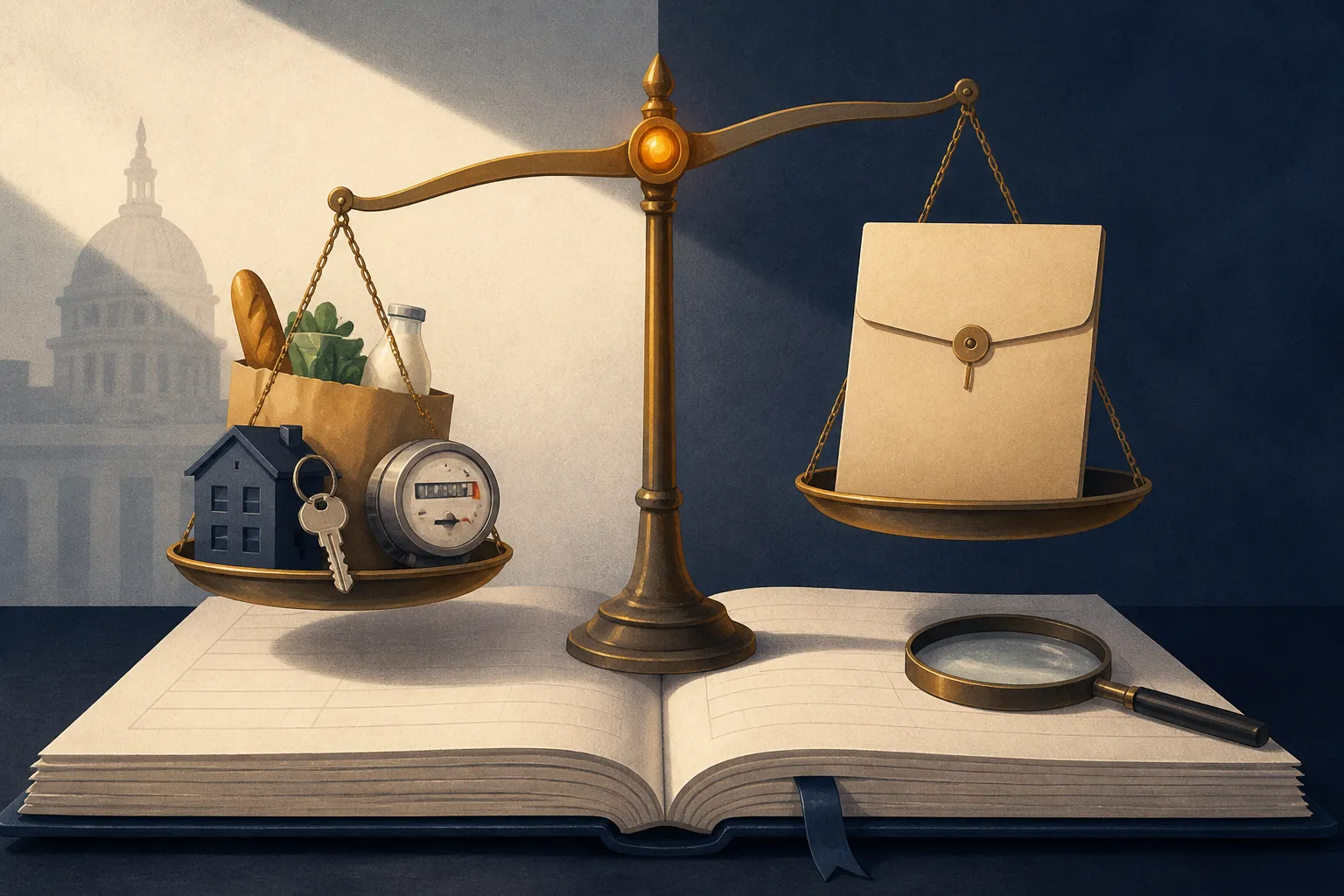

A CFA Institute blog post reports that US inflation averaged about 3.0% a year from January 1900 through December 2024. By that author's math, a dollar held as plain cash, earning nothing, would shrink to less than four cents of buying power. Treat those as one commentator's figures, not official statistics. The number on a bank statement never changes. What it buys does.
What inflation does to the value of a dollar
Inflation is a general, sustained rise in the prices of goods and services. One item getting pricier does not count. Eggs can jump in March and fall in May, and that alone says little. Economists watch broad movement across many items to see whether prices as a whole are climbing.
When the inflation rate rises, each dollar buys less. Picture a grocery cart that cost $100 last spring. If the same cart rings up at $103 now, your $100 bill did not change. It just covers less of the cart. The same thing happens with a rent notice that arrives with a higher number, or a utility bill that creeps up a few dollars at a time.
That is why a cash balance can look flat for years and still feel smaller. The loss is slow. It rarely shows up on a single receipt, which makes it easy to miss until you compare prices across several years.
Why interest does not automatically protect savings
A savings account pays interest, and that adds to your balance. Inflation works against it at the same moment. Whether your savings grow in real terms depends on which force is larger.
The real return is the interest rate you earn, adjusted for inflation. The plain rate on the account is the nominal rate. Suppose an account pays 2% and prices rise 3%. The balance grows on paper and shrinks in buying power. The Federal Reserve's education materials make the same point: real interest rates are the ones that matter to savers once inflation is counted.
One way to picture it is a bucket. Interest is a faucet adding water. Inflation is a small hole letting some leak out. The bucket fills in real terms only when the faucet runs faster than the leak.

What long-run history suggests, and where averages mislead
The same blog post says short-term US Treasury bills, which are short-dated government debt, also averaged about 3.0% a year over that period. It argues that savings accounts and short-term T-bills in the US and other Western countries have, on average, kept pace with inflation. That sounds reassuring. It deserves some skepticism, since it comes from a single source and not from a government dataset.
Averages smooth over bad stretches. The author points to the 1940s and early 1950s, a period of financial repression, when interest rates were held artificially low while prices rose. He reports that savers then saw a real loss in purchasing power of more than 40%. If that is right, a long-run average of roughly zero loss can sit on top of years of real pain.
So timing matters. A saver who needed the money in a bad stretch did not get the average. They got the stretch.
Limits of what these sources tell you
The material behind this piece does not give current inflation rates, current savings or T-bill rates, or a worked example of calculating a real return. It also could not confirm the long-run figures above against official data, so read them as illustrations, not settled facts.
For background on how inflation is measured, the Bureau of Labor Statistics page on income and the CPI is a starting point, and the Federal Reserve FAQ on inflation covers how the Fed looks at changes in the rate. We did not review the detail on either page, so check them directly. The BLS also lists an inflation calculator for adjusting dollar amounts, though its method is not covered here.
The 1900 to 2024 averages describe broad history. They do not say whether the same result applies to any particular account today. Deposit insurance limits, taxes on interest, and differences between account types are also outside what these sources address.
Inflation affects borrowers and lenders differently, and the Federal Reserve treats price stability as one of its responsibilities. That is a topic for another day.
This article is general education only. It is not personal financial, legal, or tax advice, and a qualified professional can speak to your own situation.
Please seek a professional. This article is general information, not financial, tax or insurance advice. Please seek a licensed financial, tax or insurance professional about your own situation.