










The core PCE price index stood at 130.902 for September 2026, up from 130.489 in August. That is a gain of about 0.3 percent in one month. The index is set so that 2017 equals 100, so the number alone says little. The change between readings is what matters.
Core inflation is a tool for spotting the trend. It is not a bill you pay.

What core inflation measures
Core inflation is the inflation rate with food and energy prices left out. The Federal Reserve's preferred gauge is the personal consumption expenditures (PCE) price index. The Bureau of Economic Analysis publishes it monthly. The Fed's policy committee mainly watches the core version.
PCE tracks prices for goods and services people in the US pay for, including some bought on their behalf, such as certain employer-paid or government-paid services. It covers a broader set of household spending than the consumer price index (CPI) or the producer price index (PPI). Think of the full cart, not only the grocery bags.
Core figures come as an index level and as a rate of change. Check the comparison. A year-over-year rate sets this month against the same month last year. A month-over-month rate sets it against last month. The same data can look calm in one framing and loud in the other.
Why food and energy are excluded
Food and energy prices swing. Weather, seasons and market shocks push them around. A frost can lift produce prices for a few weeks. A refinery problem can move gas prices in days. Those jumps can hide the direction of everything else.
There is a policy reason too. Interest rate decisions do not change prices at once. Economists generally believe the effects arrive with long and variable lags, on average over a couple of years. So the Fed wants a measure it can forecast well. Dropping the two volatile categories gives a better signal-to-noise ratio, meaning more of the trend and less static.
The data back this up. Core PCE is much more stable than PCE food or PCE energy inflation, which swing widely around it on both monthly and yearly views. The committee is not in a position to react to every short-term move in the price of eggs or diesel.
Headline versus core, and PCE versus CPI
Headline inflation includes food and energy. Core leaves them out. Over the same stretch they can disagree. If fuel jumps, headline runs ahead of core. If fuel falls, headline can lag it.
PCE and the CPI from the Bureau of Labor Statistics look alike but are built differently. They can give different rates for the same period. One difference is behavior. PCE reflects substitution. If car prices climb, some buyers skip the car and buy a bicycle, and the index picks up that shift.
Revisions matter as well. The Bureau of Economic Analysis updates past PCE data when new information arrives or methods change. A number you read one month can move later. Treat any single print as a first draft.
How to read an inflation figure and what core leaves out
Start with three questions:
- Is it headline or core?
- Does it come from PCE or CPI?
- Is it year-over-year or month-to-month?
Those checks head off most misreadings. A reader who sees a low core number and a high headline number is not seeing a mistake. They are seeing two different baskets.
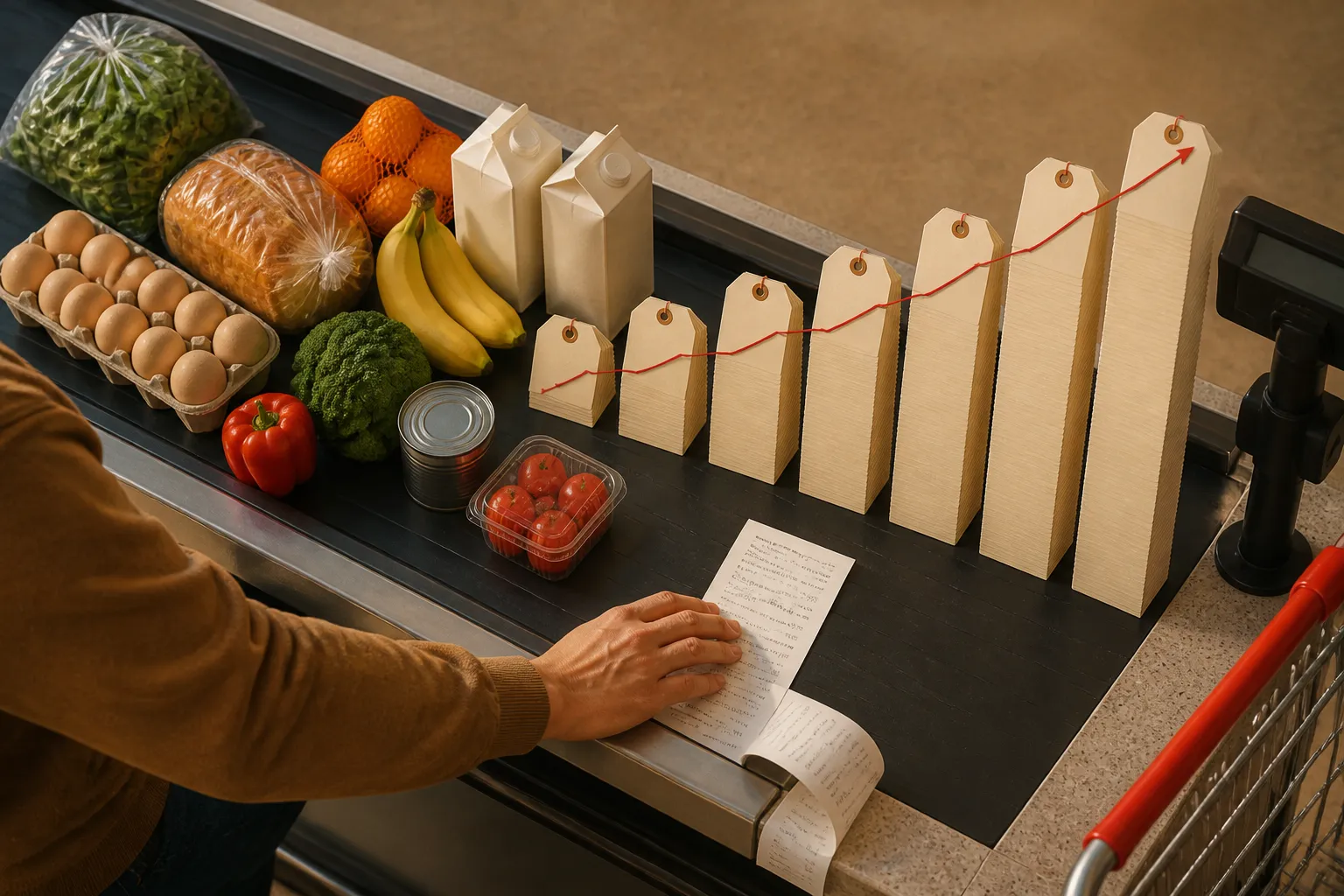
Core is not the cost of living. Households pay real money for groceries, gas, electricity and heating. A rent notice may rise while the grocery receipt jumps too, and a core figure that excludes food and energy can understate what people feel at the register and the pump. Treating it as the whole picture is the red flag.
Your own budget may also differ from the national averages behind these indexes. A household that spends a large share on food and fuel will experience inflation differently from one that spends little. The sources reviewed here do not compare a household budget with the index weights, so that comparison is up to the reader. For decisions about your own money, check the official releases from the Bureau of Economic Analysis and the Bureau of Labor Statistics, or ask a qualified professional. This article is educational only.