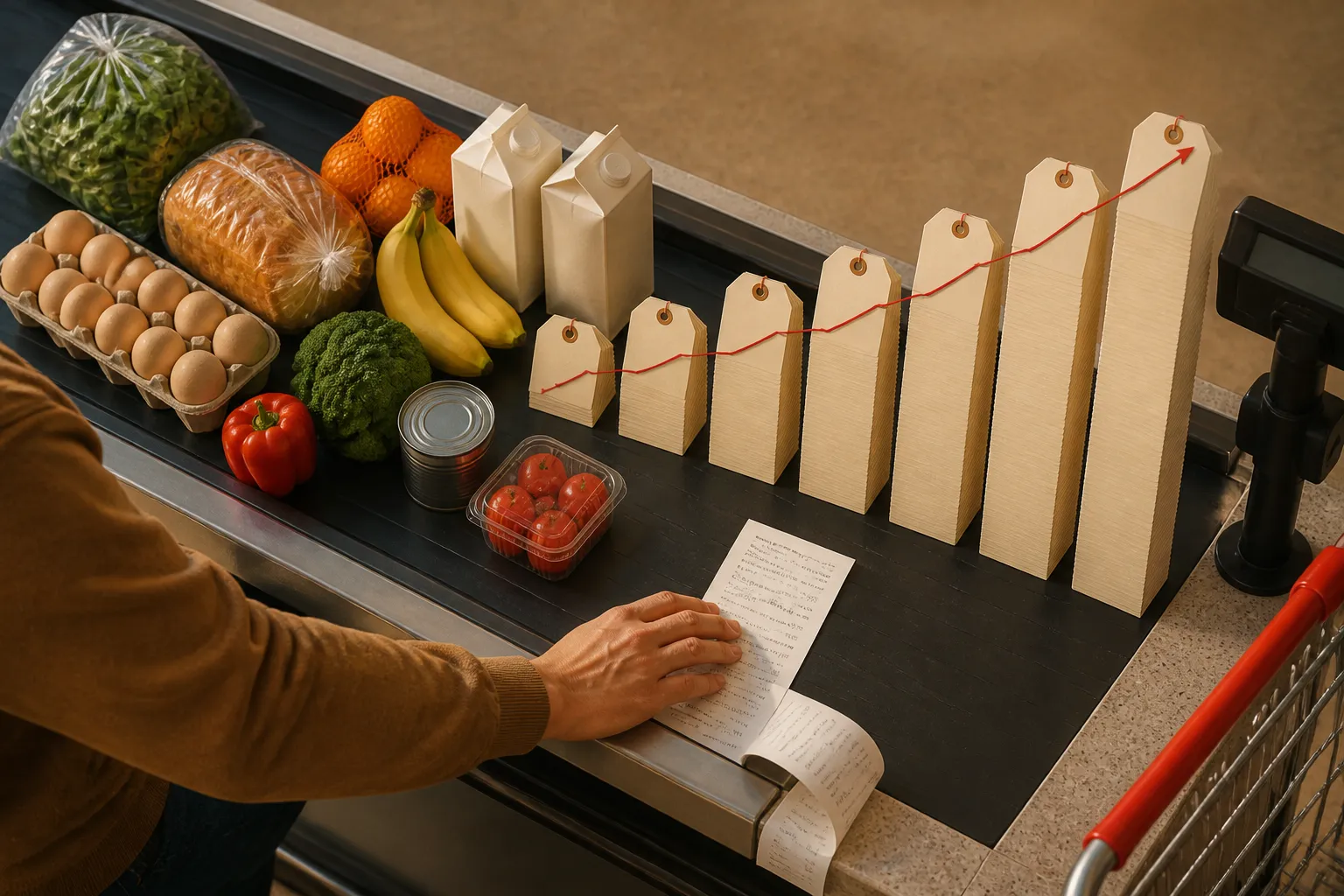










Prices rose 3.7 percent over the year to September 2026, according to figures cited by Business Insider. That beat the 3.6 percent economists expected and topped August's 3.4 percent. A 3 percent raise in a year like that buys less than the paycheck before it.

Why the inflation comparison comes first
A raise is only good news if it outruns prices. The test is simple. Take the percentage increase you are asking for and set it next to the change in prices over the same stretch of time. If prices climbed faster, your paycheck grows in dollars but buys less at the store.
The standard yardstick is the Consumer Price Index, or CPI. It is the Bureau of Labor Statistics measure of what a typical basket of goods and services costs. The agency explains how it relates to income in its Income and the CPI fact sheet, and the CPI databases let you pull the official series yourself. That beats going on memory. Most people remember the price of eggs and forget the lease renewal.
What the latest pay and price data show
The BLS tracks real average hourly earnings. "Real" means adjusted for price changes, so it shows what pay can actually buy. From June 2025 to June 2026, that figure rose just 0.1 percent. Pay barely outran the grocery aisle.
A Business Insider analysis tells a similar story over a longer span. Average hourly pay was $35.84 in January 2025, which is $37.79 in today's dollars. The latest month it cites came in at $37.81. That is a gap of two cents over about 20 months. A raise you got in that window was likely absorbed, on average.
Averages hide the sharp edges. The same report notes gasoline was up 9.1 percent in September compared with the month before. One category can jump while the headline number looks tame. If you drive to work, that month may have felt worse than the average suggests.
What employers are planning and how workers feel about it
Employers are not signaling a catch-up. Mercer reports that most US employers plan to keep 2026 salary increases flat to 2025 levels. If your company follows that pattern, the same raise as last year may fall short of this year's prices.
Workers sense it. SHRM coverage says workers report pay is not keeping up with the cost of living. That fits the flat real-earnings data. It does not tell you how far any one person's pay has slipped. Your own number matters more than a survey.
SHRM has also published a piece on what employees say is a fair annual increase. The percentages are not quoted here, so read the original before treating any figure as a benchmark.
Preparing the request and the questions to ask
Start with your own history. Write down the date of your last raise and your pay then. The BLS offers a CPI Inflation Calculator through its CPI pages, and it shows what that old wage would need to be today to buy the same things. Compare that with what you earn now. The gap, if any, is your starting fact.
Then bring questions as well as a number. Does the planned increase match or beat recent inflation by the BLS data? How are pay decisions made, and how are they explained? SHRM coverage suggests employers without raise budgets can start by explaining pay decisions. A clear answer is useful. A vague one tells you something too.
Treat a plan to hold raises flat to last year as a warning sign. When prices rise faster than pay, real earnings fall even if the paycheck looks the same on paper.
What this article cannot tell you
You will not find a script for the conversation here. Timing, documentation and negotiation tactics are also outside what the sources cover. Nor is there a formula for the exact percentage a specific salary needs, or CPI figures for your own area beyond the national numbers above.
Union, contract and legal rights tied to pay increases are a separate matter. Check your employer's policy, your contract, or a qualified professional. This article is educational only, not financial or legal advice, and your situation may differ from the national averages cited.