










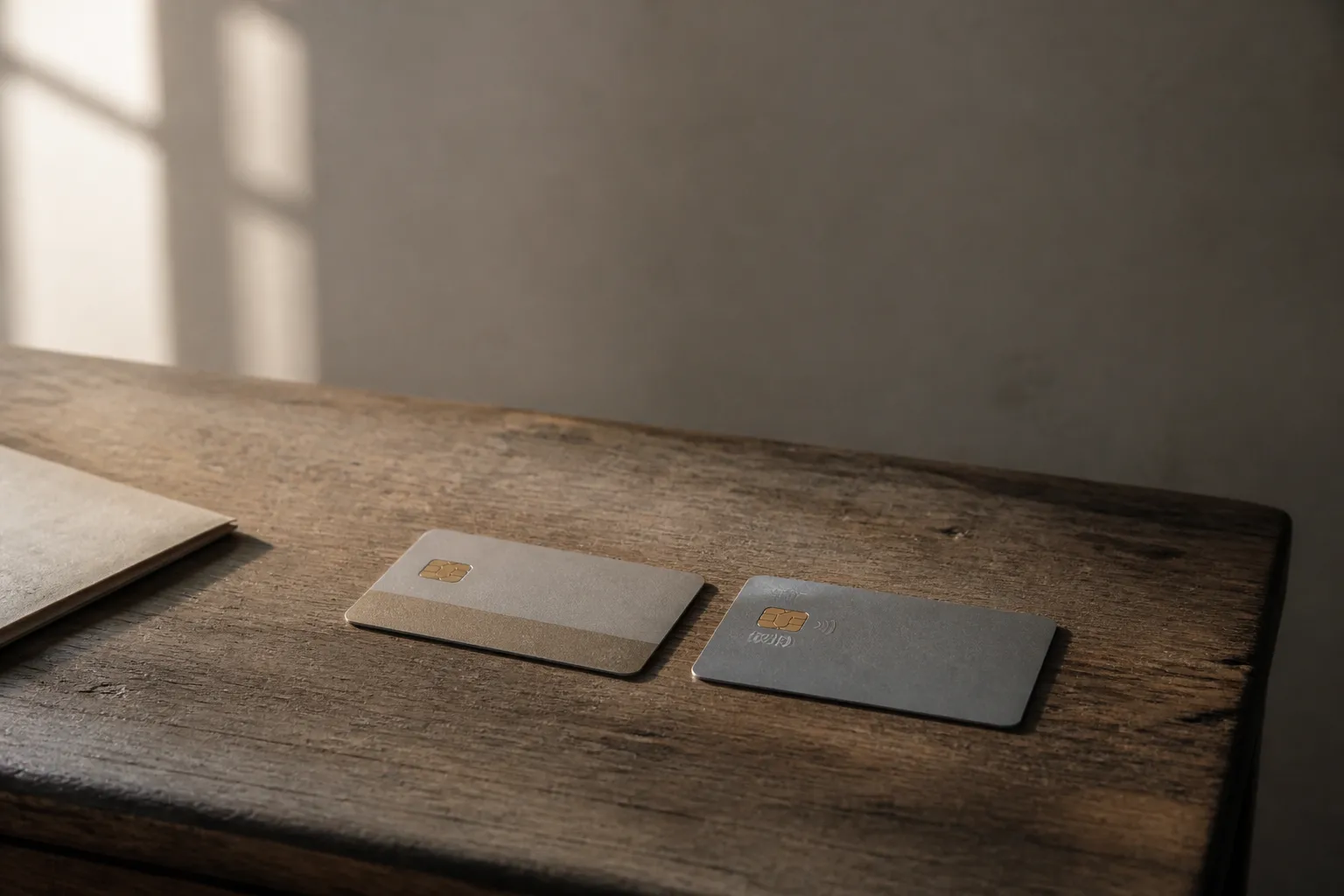
Prepaid and bank debit cards can look alike and may carry the same payment-network logo. The key difference is where the money sits before you pay: on a prepaid card, you add funds to the card; with a bank debit card, a purchase draws from money in an account at a bank or credit union. That difference affects fees, how you add funds, and what to check before relying on a card.

A payment-network logo does not tell you which kind of card you have. Prepaid, debit, and credit cards can all display a network brand. The logo generally indicates where a card may be accepted, not whether the money comes from a deposit account, a prepaid balance, or borrowed credit. The Consumer Financial Protection Bureau (CFPB) explains the basic distinction.
There is another useful contrast: a credit card is a way to borrow money. A prepaid card or debit card generally spends money you already have. Credit card borrowing can bring interest if you carry a balance and a fee if you pay late. With prepaid and debit cards, you generally do not owe borrowed money after an ordinary purchase, unless the card or account allows an overdraft.
That exception matters. If a payment is more than the available balance, it is usually declined. But some accounts and some prepaid cards permit overdrafts. The payment may go through, leaving you to replace the shortfall, and a fee may apply for each transaction that overdraws the balance. Check the card or account terms rather than assuming every card handles a low balance the same way.
Where the money sits
A prepaid card is not linked to a bank or credit union account. You load money onto it before spending. A bank debit card, by contrast, is tied to an account, often checking, and purchases draw on the account balance. The card is a way to access the funds, not a separate pool of money.
Both types can limit spending to available funds, but the balance is tracked in a different place. With prepaid, you need to know what remains on the card. With bank debit, you need to know what remains in the linked account, including any transactions that have not yet appeared in the balance you are viewing. The relevant terms and account information can explain how a particular card handles transactions that exceed available funds.
Do not assume that a prepaid card is the same as a gift card just because it looks similar. The CFPB lists reloadable and non-reloadable prepaid cards, payroll cards, government benefit cards, some college ID cards, and gift cards as distinct types to consider. Their uses and terms can vary. The label and the card’s disclosures are more informative than its appearance. See the CFPB’s overview of card types for more context.
Fees can change the total cost
Prepaid cards may charge an activation fee, a monthly maintenance fee, or a fee for each transaction. The amount and combination depend on the card and how it is used. An activation fee may be a flat amount or depend on the initial load, meaning the money first added when the card is purchased. At a store, the card’s listed price may include that fee, so the amount paid at checkout may be more than the amount available to spend.
A monthly fee may be deducted automatically, even during a month when you do not use the card. Some cards waive that fee under certain conditions, such as when a paycheck or benefits are deposited directly. Other cards charge per purchase, including online or in-store purchases. A plan with a monthly fee could cost less than per-transaction fees for someone who uses the card often, while the reverse could be true for occasional use. The CFPB’s fee explanation describes common categories, but there is no single fee amount that applies to all prepaid cards.
Compare the costs using the way you expect to use the card. Consider purchases, cash withdrawals, bill payments, and whether money will be deposited regularly. A card may have different fees for different actions. Store-bought prepaid cards are required to include a fee chart, and providers must disclose certain fees and terms before purchase. Read the chart and the additional program information instead of relying on the front of the package. The CFPB outlines what to consider when buying a prepaid card in a store.
Buying, loading, and using prepaid cards
Prepaid cards may be sold in stores, online, over the phone, or through some banks and credit unions. An online purchase may provide a virtual card number for use before a physical card arrives, or the card may be mailed. Some cards are reloadable, which means funds can be added after the initial load. Others are non-reloadable. A few may become reloadable after registration, so check the terms before counting on being able to add money later.
Network-branded cards may be accepted wherever that network is accepted, but other prepaid cards may work only at ATMs or particular kinds of stores. Even a widely accepted card may have limits on specific uses. Confirm that it works for the places and payments you have in mind. The CFPB’s guide to shopping for a prepaid card recommends comparing acceptance, features, and fees.
Payroll cards can receive wages from an employer, and government benefit cards can deliver certain public benefits. Some college ID cards also function as prepaid cards, with use limited to campus or extended to retailers that accept the network brand. These examples show why the type of card matters: a card intended for one purpose may not offer the same flexibility as a general-purpose reloadable card.
Registration and protections need a closer look
Registration can matter if a card is lost or stolen. The CFPB advises checking whether a card can be registered and whether the issuer verifies your identity after purchase. An unregistered card may leave funds less protected in a loss or theft. Registration may also make account activity reports available and provide a way to contact the company about an error. Keep the card’s customer service details somewhere separate from the card itself.
Do not infer the exact protections from the word “debit” or from a network logo. The details can depend on the card and its terms. Review the disclosures for liability and error-resolution protections, meaning the rules for responsibility when something goes wrong and the process for raising a possible mistake. The available guidance does not spell out every protection or the steps for every dispute, so use the issuer’s official documents and contact information for the card in question.
Prepaid balances and deposit insurance are another point to verify. The information summarized here does not establish whether a particular prepaid card balance is covered by FDIC deposit insurance. Check the card’s disclosures and the FDIC’s prepaid card information and guidance on prepaid cards and deposit insurance. For questions about a specific arrangement, consult the issuer or a qualified professional.
Questions to answer before choosing
Start with the job the card needs to do. Will it be used often or only occasionally? Will you make purchases only, or also withdraw cash and pay bills? Will wages or benefits be deposited to it? The answers can affect which fees apply and whether a card’s limits fit your plans.
Then check the card’s type, reload rules, acceptance, and protections. Confirm that it can be used where you expect, and read the complete fee chart and terms. If overdrafts are possible, find out how the card handles them and what fees may follow. If the card is meant to hold money over time, verify directly with the issuer and official sources how that balance is treated, including any applicable deposit-insurance conditions.
A side-by-side comparison of account access, card fees, reloadability, acceptance, and protections can make the difference clear. If a term is unclear, check the issuer’s official disclosures or ask a qualified professional before relying on the card for an important payment or balance.
Please seek a professional. This article is general information, not financial, tax or insurance advice. Please seek a licensed financial, tax or insurance professional about your own situation.


