











Say you open your statement and see a $212 charge from a store you never visited. Or a payment you made two weeks ago is missing. Or a jacket you returned still shows up as owed. Each of these might be a billing error under federal law, and that term has a narrower meaning than most people expect.
What the Fair Credit Billing Act covers
The Fair Credit Billing Act, or FCBA, sets out how disputes get handled on open-end credit accounts. "Open-end" just means revolving credit, like a credit card, where you can borrow, repay, and borrow again. The law covers problems such as incorrect charges or amounts, unauthorized transactions, and a creditor failing to post a payment or credit. The Federal Trade Commission enforces it.
The rule itself lives in federal statute at 15 U.S.C. § 1666, titled "Correction of billing errors." Regulation Z, the rule that carries out the Truth in Lending Act, adds the step-by-step detail in section 1026.13. You can read the statute through the U.S. Code and the regulation through the Consumer Financial Protection Bureau. The FTC also posts a page on the law.
One myth is worth clearing up. The FCBA does not cover debit card transactions. It also is not the same thing as the Fair Credit Reporting Act, which deals with the accuracy and privacy of credit reports. The two laws overlap in real life, but they answer different questions.
Which problems count as billing errors
Think of a billing error as a statement that does not match what actually happened. Covered disputes generally include a wrong amount, a charge for goods or services that never arrived or were defective, and a transaction you did not authorize. A summary from Cornell's Legal Information Institute lists these categories.
Unauthorized use comes with a liability cap of $50. That figure is a general starting point. The sources I reviewed do not explain how it plays out in every fraud scenario, so treat it as a headline number, not the full story.
Timing matters too. For certain charges over $50, you have 60 days from the date the statement was sent to dispute them. Notice the wording: the date it was sent, not the day you got around to opening it.
Before the next section, here is a quick scorecard of the questions that tend to decide whether a dispute fits the rules.
- Is the account a credit card or other revolving credit, not a debit card?
- Does the problem fit a category: wrong amount, undelivered or defective goods, unauthorized use, or a missing payment or credit?
- For a covered charge over $50, are you inside the 60-day window from the statement date?
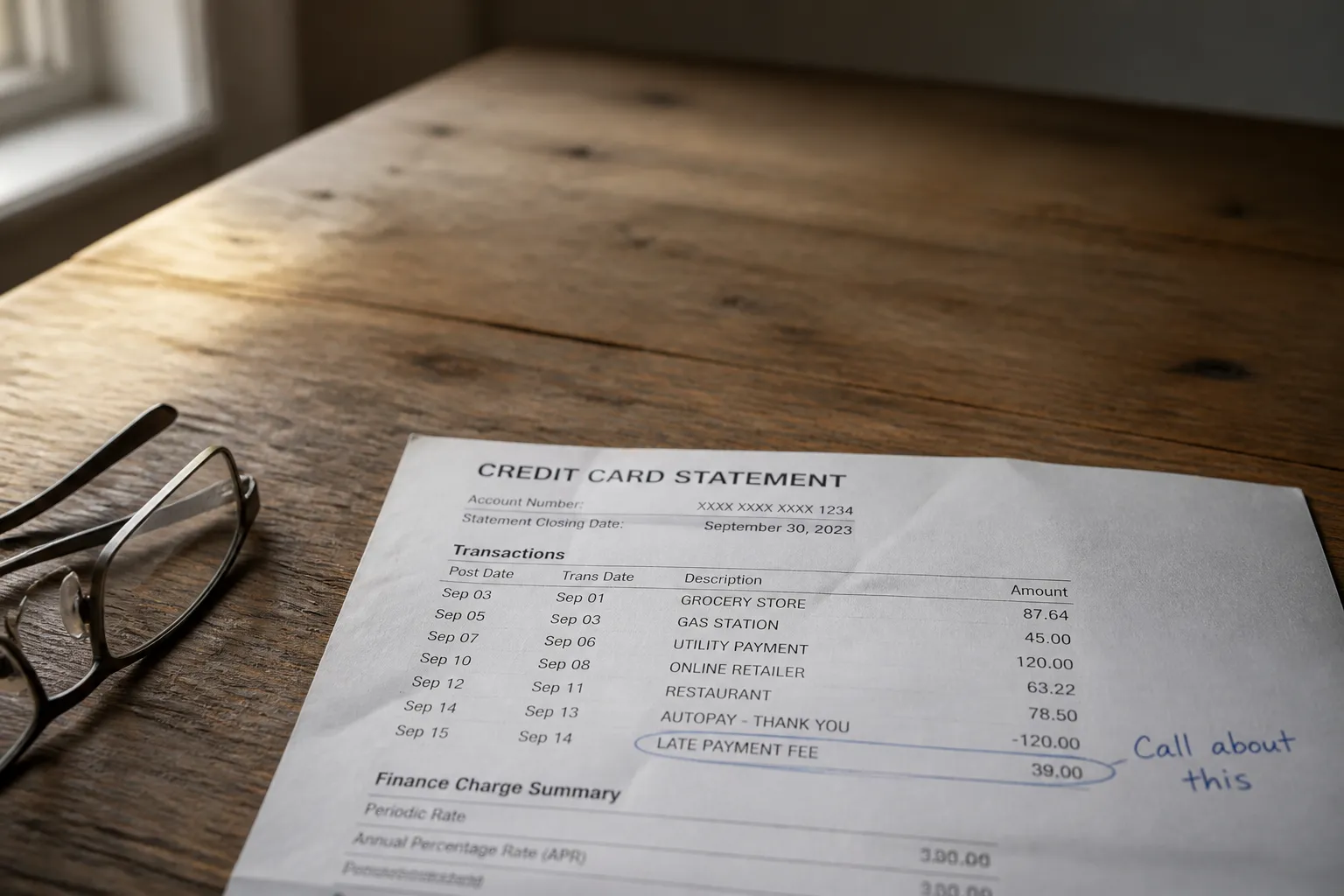
- Does your written notice name you and the account?
- Does it state the amount you believe is wrong and why?
- Did you keep a copy and note the date you sent it?
How a dispute starts and what the creditor must do
A dispute starts with a written notice. Under the statute, the notice must identify you and the account, say you believe the statement has an error and the amount involved, and give your reasons. A phone call alone may not trigger the legal protections, which is why a written record helps. Check your card issuer's posted dispute instructions for where to send it.
Then the clock moves to the creditor. It must send a written acknowledgment within 30 days. It then has two complete billing cycles, and no more than 90 days, to investigate and either correct the error or explain why it thinks the statement was right.
During that time, you may withhold payment of the disputed amount. The creditor may not report that amount as delinquent or as an adverse item on your credit report because of the dispute. It also may not speed up your payments or close your account because you used these rights in good faith. If the creditor does fix an error, it must credit any finance charges on the amounts that were billed by mistake.
One caution about older headlines. In 2020 the CFPB said it would not cite creditors for running past the usual timeframe if they made good-faith efforts to get merchant information and met other conditions. A law firm summary describes that guidance. It reflected a specific period. It is not a permanent change to the deadlines.
Limits of the rules and common questions
The sources leave real gaps. They do not say what happens if a creditor misses a deadline or breaks the rules, or how a consumer enforces them. They do not set a required format beyond the contents of the notice. They do not cover state law differences, or how to fix a credit report under the Fair Credit Reporting Act. The CFPB also publishes official commentary on section 1026.13 that explains how the rule is meant to work.
A few practical checks can keep a dispute on track. Did the notice go out within 60 days for a covered charge over $50? Did it include the account details, the amount, and the reasons? Did a written acknowledgment arrive within 30 days? Was the matter resolved within two billing cycles and no more than 90 days? If the answer to any of these is no, that is worth noting.
A creditor that tries to collect a disputed amount, or reports it as delinquent while the investigation is open, may be acting outside the rules described in the sources. This article is educational only, not legal, financial, or tax advice. For a specific dispute, check the official CFPB and FTC materials or talk with a qualified professional.
Please seek a professional. This article is general information, not financial, tax or insurance advice. Please seek a licensed financial, tax or insurance professional about your own situation.


