










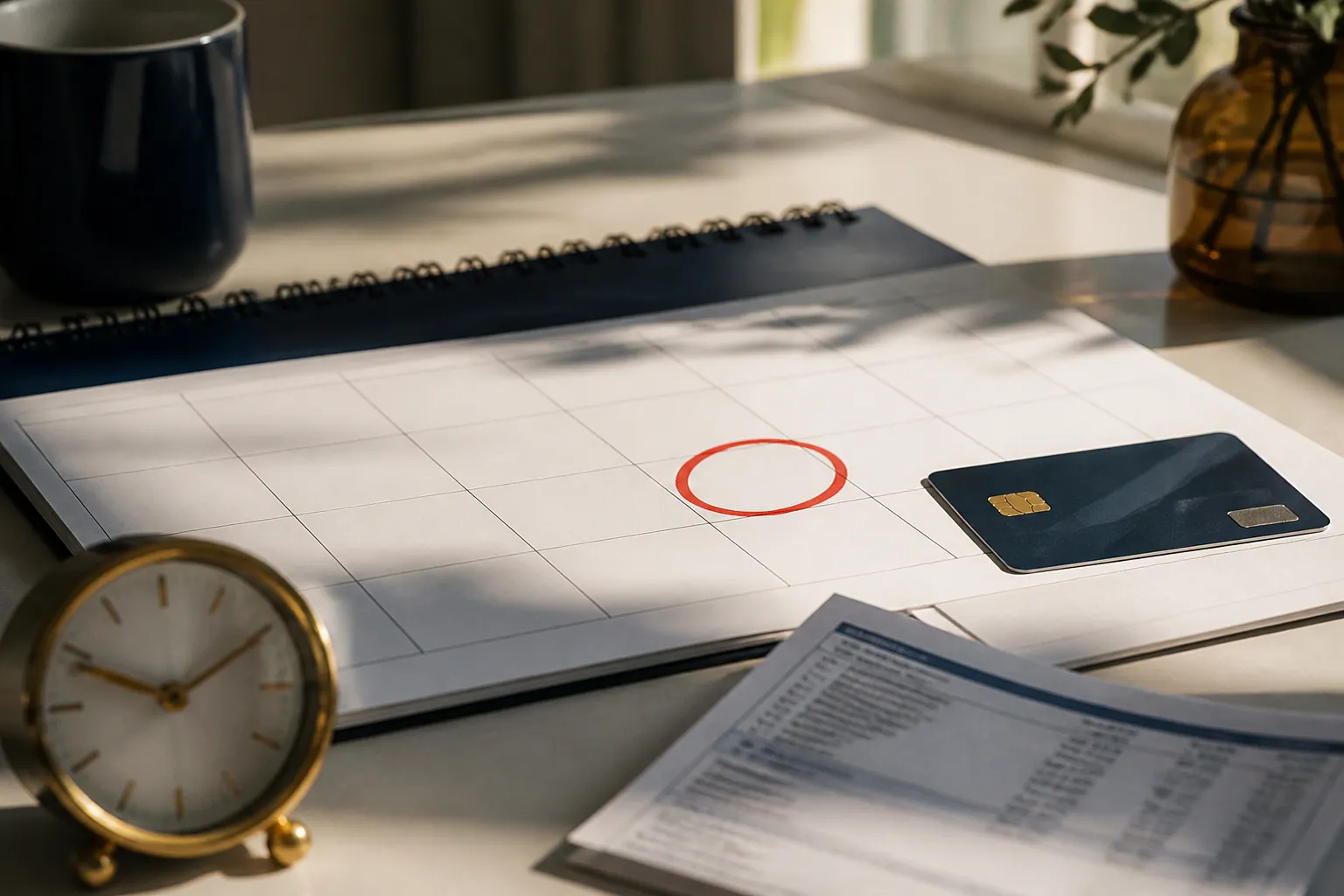
Your statement closing date is the last day of a billing cycle. Everything that posts by then goes on the current statement. Anything after it waits for the next one.
Picture a card that closes on the 12th. A grocery run on the 11th shows up on this month's bill. The same run on the 13th lands on next month's. The date is small, but it decides which bill carries each charge.
What the closing date marks on your account
The issuer cuts off the cycle on the closing date. It totals what you owe and produces a statement covering activity since the previous close. That statement is a snapshot, not a live balance. Your balance keeps moving after the close, but the statement does not.
This is why two people with the same spending can see different bills. If one buys a big item the day before close and the other the day after, the first owes it sooner. The second gets another cycle before that charge is due.
The closing date is not the same as the due date. People mix them up often. The closing date ends the cycle. The due date is the deadline to pay the bill that cycle produced. Your statement should list both, so check them side by side.
How the timeline runs from close to due date
The Consumer Financial Protection Bureau says card issuers must have procedures to mail or deliver bills at least 21 days before the payment is due. So the due date should fall at least three weeks after the statement goes out. That gap is your window to review charges and arrange payment.
The grace period is the stretch between the end of the billing cycle and the payment due date. If your card gives a grace period and you carry no balance, you can avoid interest on new purchases by paying the full balance by the due date. The closing date starts that clock.
The law does not require issuers to offer a grace period. The CFPB notes that most cards give one on purchases. Check your own card terms before you count on it.
How paying in full keeps the grace period alive
To keep the grace period, pay the full statement balance on time each month. Paying in full only some months can cost you the grace period for the unpaid month and the month after it. One partial payment can change how interest works across two cycles, even if you go back to paying in full right away.
Once the grace period is lost, interest on the unpaid portion starts. New purchases also begin to accrue interest from the date each is made in the new cycle. They no longer sit interest-free until the due date. This is where the closing date matters. It tells you which cycle a purchase belongs to, so you can see where interest would apply if you carry a balance.
Where cash advances and checks differ
Grace periods typically apply only to purchases. Cash advances and checks from the issuer generally accrue interest from the transaction date. There is no interest-free window to wait out. That holds even when you pay your purchase balance in full every month.
This is an easy trap. Someone who always pays in full may assume a cash advance behaves the same way. It usually does not. The statement closing date still sorts the advance onto a bill, but interest has likely been running since the day the cash moved.
The CFPB also stresses that grace periods are not guaranteed by law. Your card agreement spells out what your card does. Read that section once and keep it handy.
Questions to ask your issuer
Some answers are specific to your account, and a general article cannot supply them. Ask your issuer directly:
- Does this card give a grace period on purchases, and does it apply to cash advances?
- What are the statement closing date and the payment due date on my account?
- Can the closing date be changed, and if so, how do I request it?
- Does the issuer report my balance to the credit bureaus around the closing date?
The last two matter more than they look. How a closing date is set, and whether you can move it, varies by issuer. How your closing date affects credit utilization or credit reporting also depends on the issuer, so ask rather than guess. The same goes for a bill that arrives late or a closing date you think is wrong. Start with the issuer. The CFPB is another place to turn if the issuer does not resolve it.
Find the closing date on your next statement and write it down. Then compare it to the due date printed beside it.
Please seek a professional. This article is general information, not financial, tax or insurance advice. Please seek a licensed financial, tax or insurance professional about your own situation.


