











A stolen debit card can put money in your checking account at risk within minutes. The good news is that the first day has a clear order. Report the loss, learn the deadlines that shape how much you could owe, and watch for signs that your card data has been used. None of these steps takes long, but the timing matters.
The Federal Trade Commission says it never threatens you, never asks you to move money to “protect” it, and never tells you to withdraw cash or buy gold. Treat any caller who asks for those things as a warning sign.
Call your bank or credit union first
Contact your bank or credit union as soon as you realize the card is missing. The Consumer Financial Protection Bureau (CFPB) says prompt notice is the factor that most affects how much you could be responsible for. Use the phone number on the back of your card, or the number listed in your bank's official app or website. Do not rely on a number that came in a text or a call you did not start, since scammers often copy real bank names.
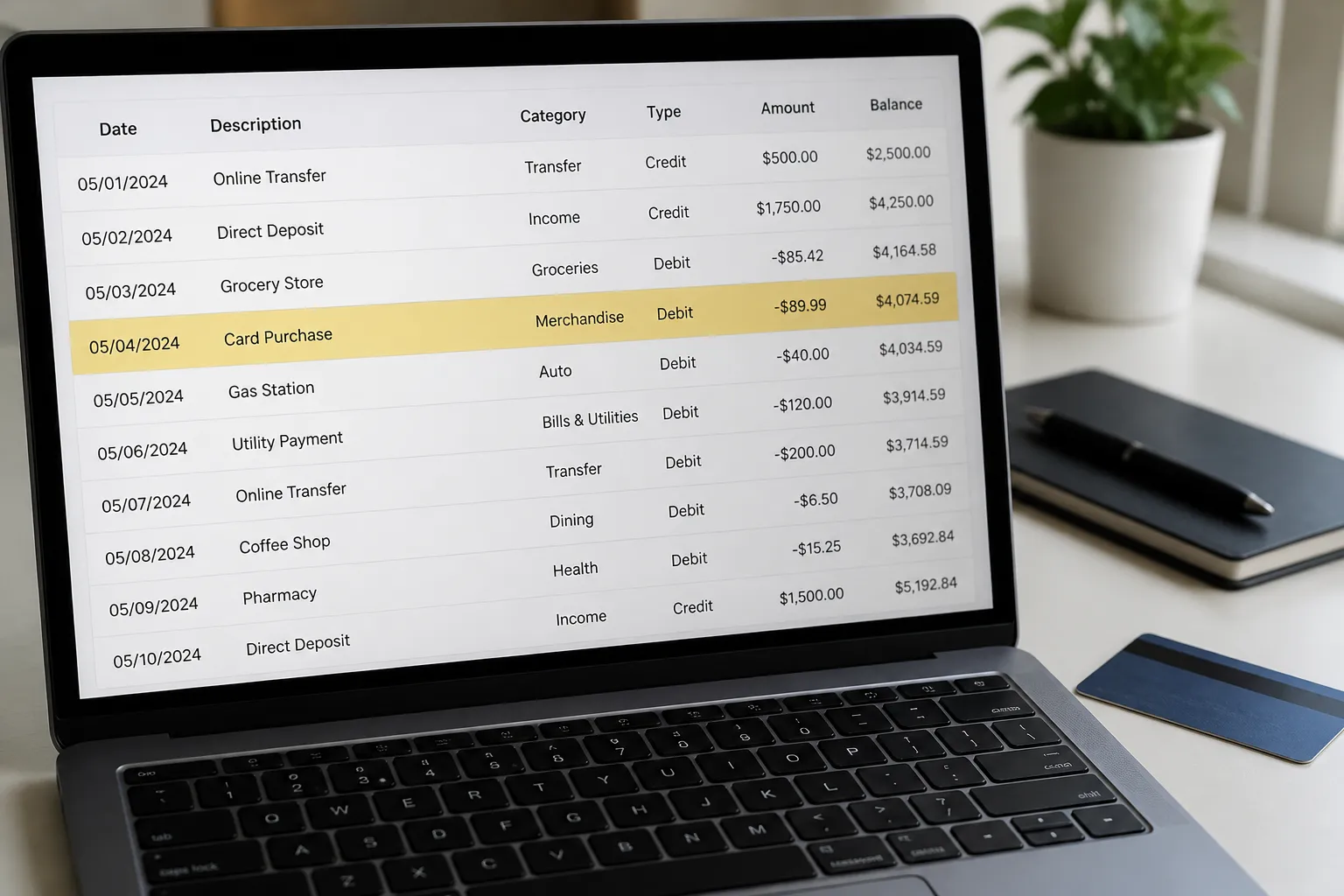
A debit card purchase counts as an electronic fund transfer. That category can carry federal protections that a cash withdrawal or a paper check might not. Electronic fund transfers include ATM withdrawals, debit card purchases, some online bill payments, and automatic account debits. When you call, describe each transaction you did not make. Give the date, the merchant name if you see it, and the amount. That detail helps the institution sort the charges correctly.
Ask the institution to block the card right away. Then ask about a replacement. The sources reviewed for this topic do not explain how replacement cards are issued or how long they take, so confirm those details directly with your bank.
Understand the two-day and 60-day clocks
The main federal rule here is Regulation E, found at 12 CFR 1005.6 and titled “Liability of consumer for unauthorized transfers.” An unauthorized transaction is a charge or withdrawal you did not make or allow. The full regulation text was not available for this review, so the points below come from CFPB guidance. Read the rule itself or ask your institution if you need the exact language.
Here is the basic timing. If you tell your bank or credit union within two business days after you discover the loss or theft, the institution cannot hold you responsible for more than the unauthorized amounts or $50, whichever is less. The two-day clock starts when you discover the loss, not when a thief first used the card. Write down when you noticed the problem, because that date may matter later.
If you wait longer than two business days, you could be responsible for up to $500 in unauthorized transactions. There is a separate clock for statements. If a periodic statement shows an unauthorized withdrawal and you do not report it within 60 days of that statement, you could owe the full amount of later transactions made before you reported it. Check your activity during the first day, then keep checking over the following weeks.
After you give notice, the institution generally has ten business days to investigate. If it finds an error, it must correct the error within one business day, and then it has three business days to report its findings to you. The sources do not say whether provisional credit is given while a claim is under review, so ask your institution how it will handle your claim.
Look for signs the card data was misused
A stolen card can be the first step toward identity theft, especially if a thief also has other personal details. The USAGov identity theft guidance notes that scammers can capture card data with skimmers installed on ATMs, cash registers, and fuel pumps. Think about where you last used the card. That list can help you spot a place to mention when you file a report.
If the theft leads to identity theft, close the affected accounts. Contact the security or fraud departments of each financial institution where you hold an account, including card issuers and banks. USAGov recommends following the step list on IdentityTheft.gov. You can report identity theft to the Federal Trade Commission there, and the site gives you an Identity Theft Report and a recovery plan. Also file a report with your local police. The FTC identity theft phone line is 1-877-438-4338. Keep copies of every report and reference number in one folder, paper or digital.
Next, ask the three nationwide credit reporting agencies about fraud alerts and credit freezes. The sources do not explain how to place either one, how long each lasts, or what it costs. Check the consumer pages of Equifax, Experian, and TransUnion, or ask the CFPB or FTC for current steps. Watch for warning signs such as bills for things you did not buy, debt collection calls about accounts you did not open, accounts on your credit report you do not recognize, loan denials, and mail that stops arriving.
Watch for scam callers and know the gaps
Scammers often pose as the FTC, the CFPB, other agencies, law enforcement, or your bank. They sometimes call right after a theft is reported, when you are already upset. Hang up, then contact the organization through its official website or phone number. Do not use a number the caller gave you.
Some official guidance was incomplete for this review. The FTC lost-or-stolen card page returned mostly site navigation. The FDIC and OCC pages did not include useful details on billing disputes or card fraud. The CFPB identity theft page was cut off before its credit protection steps. A linked National Consumer Law Center PDF on debit card protections could not be read. If you need more detail, go to those official pages directly, or talk with a qualified professional about your situation.
Also note that this guidance covers debit cards and electronic fund transfers. Credit card liability rules work differently and were not covered here. If the stolen card was a credit card, check the rules for credit cards through the CFPB or your card issuer.
- Call your bank or credit union using the number on your card or its official app.
- Ask for the card to be blocked and write down the date and time of your report.
- Note every unauthorized charge, with dates and amounts.
- Check statements and account activity over the following weeks.
- If identity theft is possible, file reports at IdentityTheft.gov and with local police.
This is general education, not personal financial, legal, or tax advice. Your bank's terms and your state's rules can change the details. When in doubt, check the official sources above or speak with a qualified professional who can review your situation.
Please seek a professional. This article is general information, not financial, tax or insurance advice. Please seek a licensed financial, tax or insurance professional about your own situation.


