










Two fees, one empty account
Overdraft fees and non-sufficient funds fees both show up when a checking account lacks the money to cover a payment. The CFPB treats them as a pair for that reason. Its research puts the combined total paid by bank and credit union customers at an estimated $15 billion in 2019.
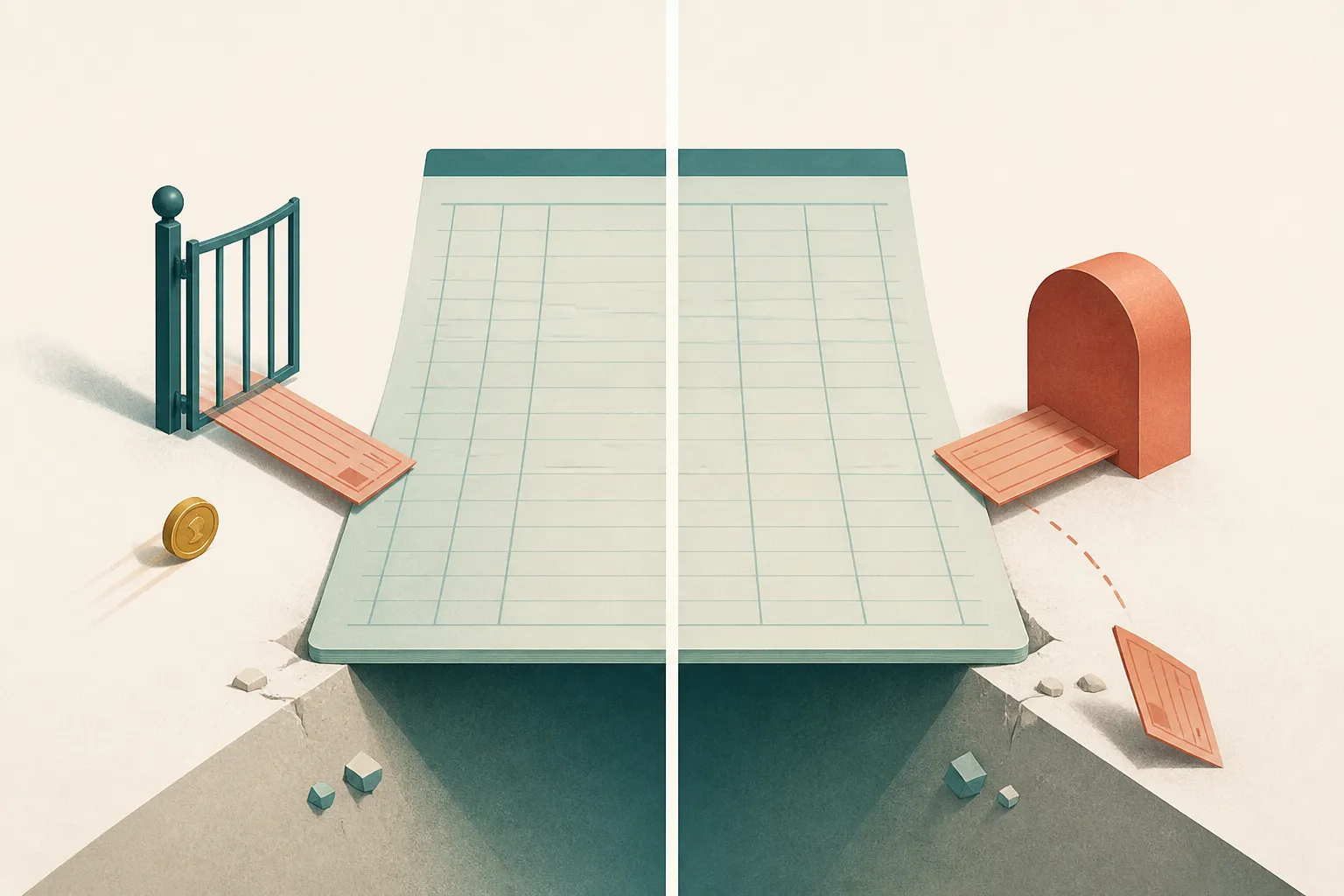
The difference is what the bank does with the payment. In an overdraft, the bank pays the item anyway and charges a fee for covering it. In an NSF case, the bank declines the item and may charge a fee for that. One fee buys the payment a pass. The other comes with a rejection.

The opt-in rule for debit and ATM use
For one-time debit card purchases and ATM withdrawals, a bank cannot charge an overdraft fee unless the customer has opted in. The CFPB describes debit or ATM overdraft fees charged without that consent as not permitted. So the first question about any debit overdraft charge is simple: did you authorize overdraft protection?
The choice is not permanent. According to the CFPB, a customer can change their mind at any time by notifying the bank or credit union. Declining coverage means the bank will not charge an overdraft fee on those debit and ATM transactions.
- Opted in: the bank may pay a debit purchase and charge a fee.
- Not opted in: the bank cannot charge an overdraft fee on that purchase.
Checks and recurring payments work differently
The opt-in rule does not cover everything. Per the CFPB, banks may still charge overdraft fees on checks and recurring electronic payments without opt-in. A rent check or a monthly bill draft can therefore cost money even if you never signed up for debit coverage.
Some banks let customers opt out of overdraft coverage for those payments too. The catch is that a declined payment can then bring an NSF fee. The CFPB notes that NSF fees are often the same amount as overdraft fees. Opting out may stop the bank from paying the item, but it does not always stop the charge.
A declined payment can also bring a second bill. A merchant may add a returned item fee on top of whatever the bank charges. One bounced payment can mean two separate fees from two different parties.
What regulators flag as risky
In April 2023, the OCC issued guidance on risks in overdraft protection programs. It pointed to two practices in particular. One is charging overdraft fees on "authorize positive, settle negative" transactions, where the account looked funded when the purchase was approved but not when it settled. The other is charging a fee each time the same item is re-presented for payment.
The OCC says these practices may create heightened risk for banks. That is a statement about supervision, not a promise about what any one customer will pay. The FDIC also published a 2026 Financial Institution Letter rescinding its supervisory guidance on multiple re-presentment NSF fees. The sources reviewed here do not explain what that change means for consumers, so this article does not guess.
The CFPB also reports that accountholders with low balances or volatile income may pay hundreds or even thousands of dollars a year in these fees. The burden is not spread evenly.
Questions to ask about a charge
When a fee lands on a statement, a few questions sort it out. They are not personal advice, just a way to read the charge.
- Is this an overdraft fee, where the bank paid the item, or an NSF fee, where the item was declined?
- Did I authorize debit overdraft protection? If not, a debit overdraft fee may be grounds for a complaint to the CFPB.
- Did a merchant also charge a returned item fee?
- Does my bank allow opting out of check and recurring-payment overdrafts, and what happens to those payments if I do?
What the sources do not say
Several gaps remain. The sources reviewed do not give the typical dollar amount of an overdraft or NSF fee today. They do not lay out state laws, or how credit card cash advance and bounced-payment fees compare. They also do not walk through the complaint process or how to request a refund. For those, check your bank's fee schedule and the CFPB and FDIC consumer pages directly.
Please seek a professional. This article is general information, not financial, tax or insurance advice. Please seek a licensed financial, tax or insurance professional about your own situation.


