










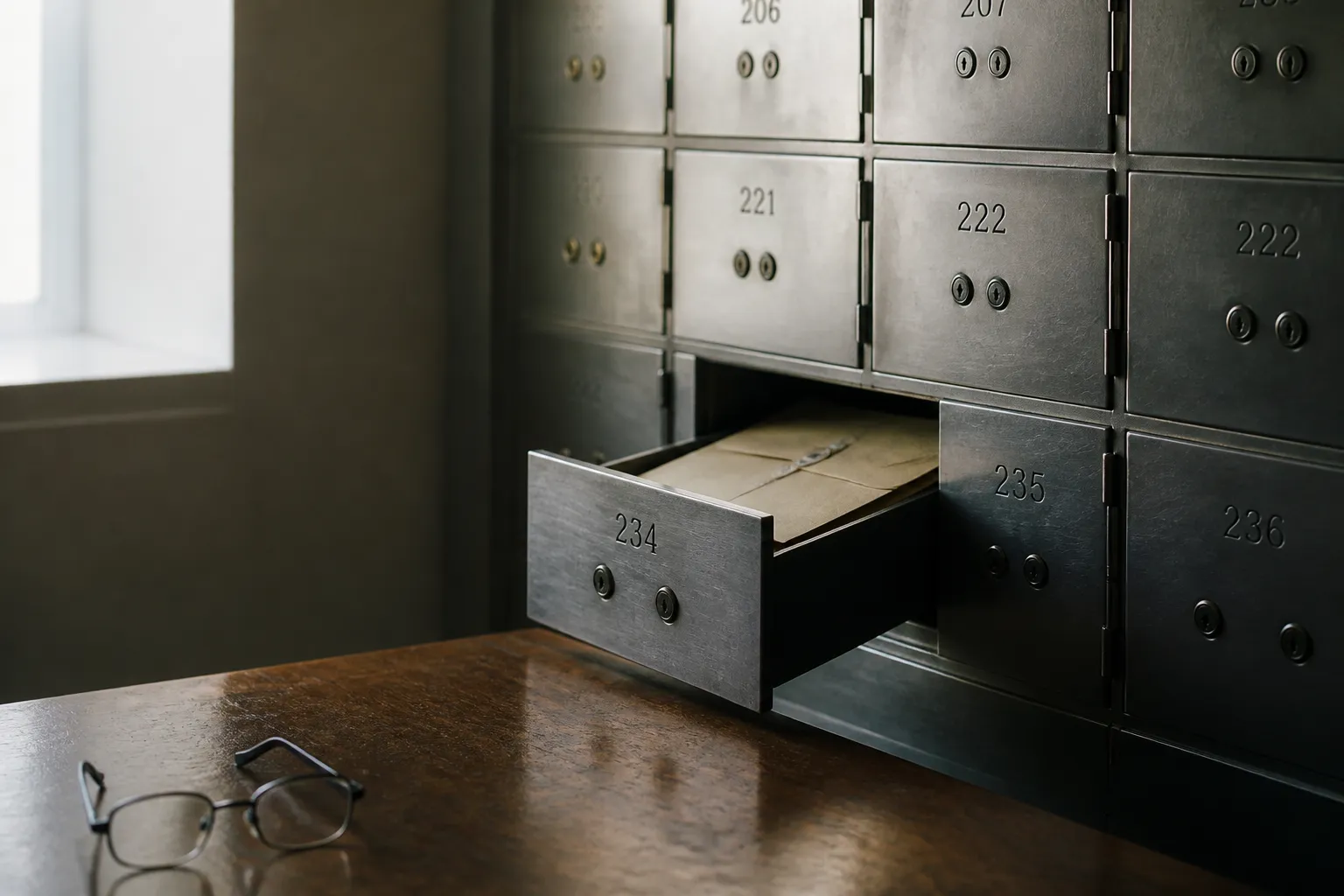
A customer walking into a quiet bank branch might follow an employee through a heavy steel grille into a room lined with polished metal drawers. Turning a pair of keys together, one held by the guard and one held by the customer, unlocks a metal container designed to hold precious keepsakes. It feels like the safest place in the world for family heirlooms, stock certificates, or personal property. Yet many renters carry a deep misunderstanding about what happens if disaster strikes the vault.
What a safe deposit box is for
A safe deposit box is a rented, locked compartment housed inside the vault of a bank or credit union. Its primary job is to provide physical protection for items that are difficult or impossible to replace. People often rent them to store original paper documents, property deeds, rare coin collections, and sentimental heirlooms that would be devastated by a house fire or home burglary. Because access requires visiting the facility during open lobby hours, it is not designed for everyday items or paperwork you might need on short notice.
Box dimensions cover a wide spectrum. You might rent a compact 2-by-5-inch drawer just large enough for spare house keys, a vehicle title, and a few folded certificates. At the larger end, branches may offer 15-by-22-inch lockers that can hold small pieces of artwork, bulky jewelry cases, or thick stacks of archival folders. Annual rental rates typically scale with the physical footprint, ranging from roughly $15 per year for the smallest slots up to $500 per year for large lockers. When deciding on a size, you should weigh the yearly rental cost against the actual value and replaceability of the property you plan to store inside.
How deposit insurance applies to the box itself
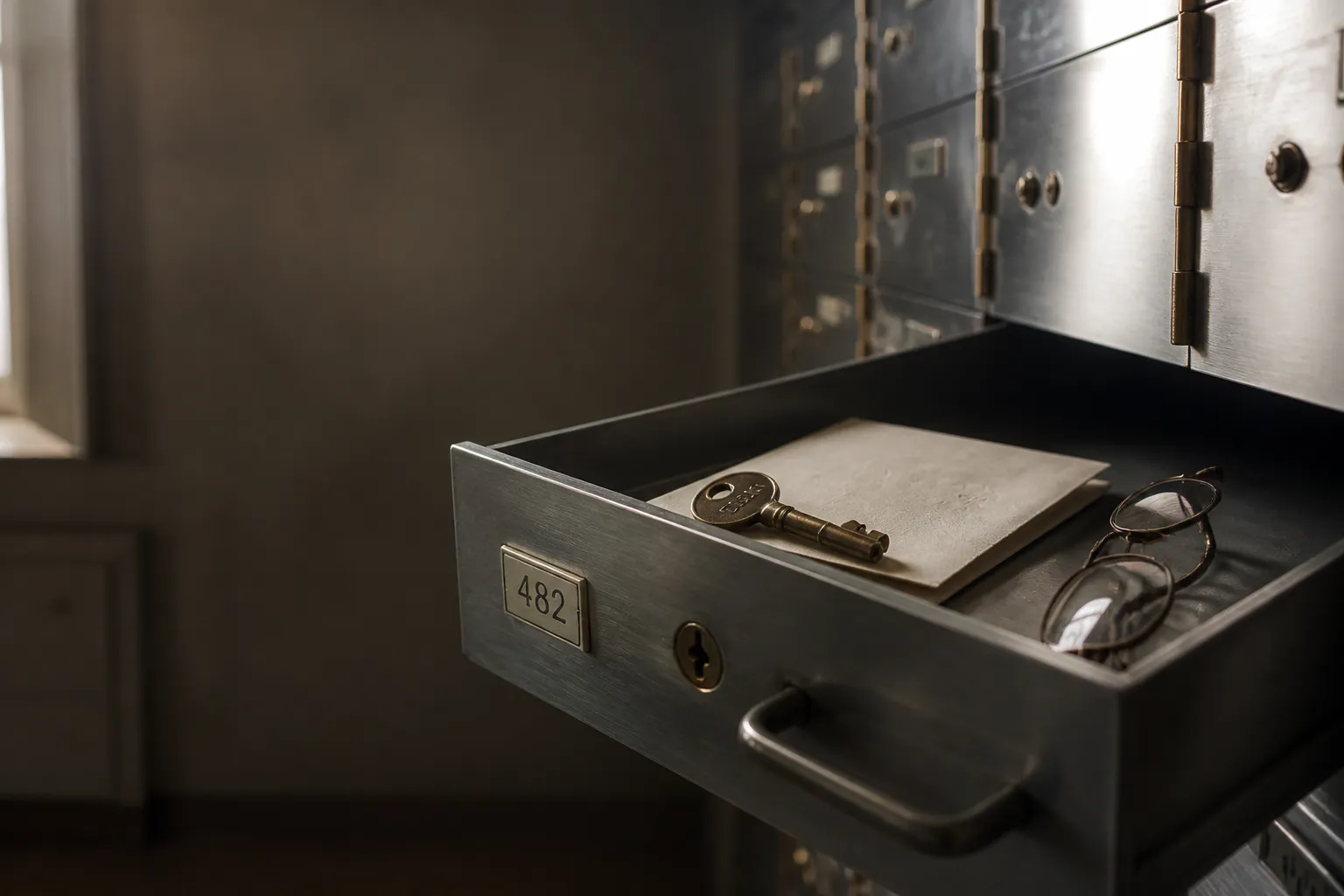
The most common misconception about safe deposit boxes involves federal deposit insurance. The Federal Deposit Insurance Corporation, an independent agency created by Congress to maintain stability and public confidence in the financial system, protects deposits at banks. Similarly, the National Credit Union Administration, an independent federal agency created by Congress in 1970, operates the Share Insurance Fund to protect accounts at federally insured credit unions. Under NCUA rules, savings, checking, money market accounts, and certificates of deposit are insured up to $250,000 per depositor, per institution, with joint accounts receiving a separate $250,000 limit per co-owner.
That federal safety net, however, stops at deposit accounts. As the FDIC explains in its consumer guide, Five Things to Know About Safe Deposit Boxes, Home Safes and Your Valuables, safe deposit boxes and their contents are not covered by deposit insurance. The agency also notes on its list of financial products that are not insured that investment products and physical box contents fall outside statutory protections. Deposit insurance was built to protect cash deposited into the institution's ledgers, not physical objects left in a locker. Renting a drawer does not confer federal backing, and the bank is generally not liable if fire, flood, or building collapse harms what is stored inside.
How banks protect boxes and what they do not promise
Even though banks do not insure the contents of a box, they do invest heavily in defensive systems. Vaults are typically built with thick reinforced concrete walls, sophisticated alarm systems, dual-key entry protocols, and climate-controlled environments. To view your box, you must present identification, sign a visitor log, and match your physical key with the guard key held by vault personnel. Furthermore, access is confined strictly to standard business hours, which keeps unauthorized visitors out during nights and weekends.
These defenses reduce everyday risks, but they do not eliminate every peril. A severe flood can inundate an underground vault, water from firefighting efforts can seep into metal seams, and catastrophic structural damage can crush rental compartments. A safe deposit box should therefore be viewed as a hardened physical space, not an insured repository. Before you sign a lease agreement, ask the branch staff for a copy of the contract. Read the liability terms carefully to see under what rare circumstances, if any, the institution accepts financial responsibility for vault incidents.
Options for insuring valuables kept in a box
If you want financial reimbursement in case the items inside your box are lost or damaged, you must look outside the bank. A standard homeowners or renters insurance policy often provides a modest amount of coverage for personal property stored off-premises. However, this coverage is subject to strict conditions. According to the Insurance Information Institute, off-premises coverage varies by carrier and regularly excludes damage resulting from floods, earthquakes, mold, vermin, or poor facility maintenance. Many people also consult Triple-I guidance on off-premises storage to understand these limitations.
In addition, standard home policies usually place tight dollar caps on the theft or loss of specific luxury items, including jewelry, fine art, antiques, and furs. To protect high-value heirlooms, you can speak with a licensed insurance agent about purchasing a floater or a scheduled personal property endorsement. This endorsement lists each specific piece alongside its appraised dollar value. When arranging coverage, ask your insurer whether claims are settled on an actual cash value basis, which subtracts depreciation, or on a replacement cost basis, which pays to replace the item with a comparable new one.
Documentation, alternatives and common mistakes
Regardless of where you keep your valuables, clear records are your first line of defense. Creating a detailed inventory backed by photographs, original purchase receipts, and recent professional appraisals makes filing an insurance claim far simpler. The Insurance Information Institute publishes a brochure on home inventory planning that outlines how methodical record-keeping helps substantiate claims. To ensure these records survive an emergency, store digital copies in secure cloud storage or maintain a physical copy in a separate building from the items themselves.
It is also wise to consider which items truly belong in a bank vault and which belong close at hand. A safe deposit box is a poor choice for emergency travel documents like passports, medical directives, or durable powers of attorney, because you may need these papers on a Sunday evening or during a holiday weekend when bank branches are closed. Those time-sensitive documents are often better kept at home in an accessible, fire-resistant safe. Keep in mind that a home safe has its own trade-offs, as it lacks the perimeter alarms of a bank vault and could be opened by an intruder or carried away during a burglary.
The most common mistake consumers make is assuming that the institution guarantees everything behind the vault door. Another frequent error is storing precious items without updated appraisals or receipts, leaving no paperwork to back up a future insurance loss. You should review your rental agreement directly with your bank or credit union, check your current policy limits with your insurance provider, and consult relevant regulatory guides to ensure your personal treasures are properly protected.
Please seek a professional. This article is general information, not financial, tax or insurance advice. Please seek a licensed financial, tax or insurance professional about your own situation.


