











Picture a cardholder who has paid on time for two years. One month a payment fails to clear, and a few weeks later the statement shows a much higher interest rate. That higher rate is called a penalty APR. APR stands for annual percentage rate, the yearly cost of borrowing on a card. This article walks through what the public sources say about it, and is honest about what they leave out.
What a penalty APR is
A penalty APR is a higher interest rate an issuer may apply when a cardholder breaks the terms of the card agreement. Paying late and going over the credit limit are the usual examples. While it applies, it replaces the standard rate on the account.
Here is a myth worth clearing up early. Not every card has a penalty APR. According to an issuer education page, terms vary significantly from one issuer to the next. So you cannot assume your card has one, and you cannot assume it works like a friend's card does.
The rules live in the card's terms and conditions. That document, not a general description like this one, is the reliable source for what your own card would do.
What triggers it
The common triggers are late payments, returned payments, and going over the credit limit. A returned payment happens when the financial institution does not honor the payment. A bounced check sent to the card company is the classic case. Some issuers treat that as a violation even though you did try to pay.
The sources disagree on how late is too late. A CBS News report names being more than 60 days late as the most common trigger. The issuer page says payments more than 30 days late can bring the increased rate. Both can be true, because each issuer writes its own terms. That is the practical reason to read your own agreement.
Penalty rates are generally tied to behavior issuers see as risky, not applied at random. Still, depending on the issuer, one slip can be enough. One missed payment or one trip over the limit may set it off.
What it can cost
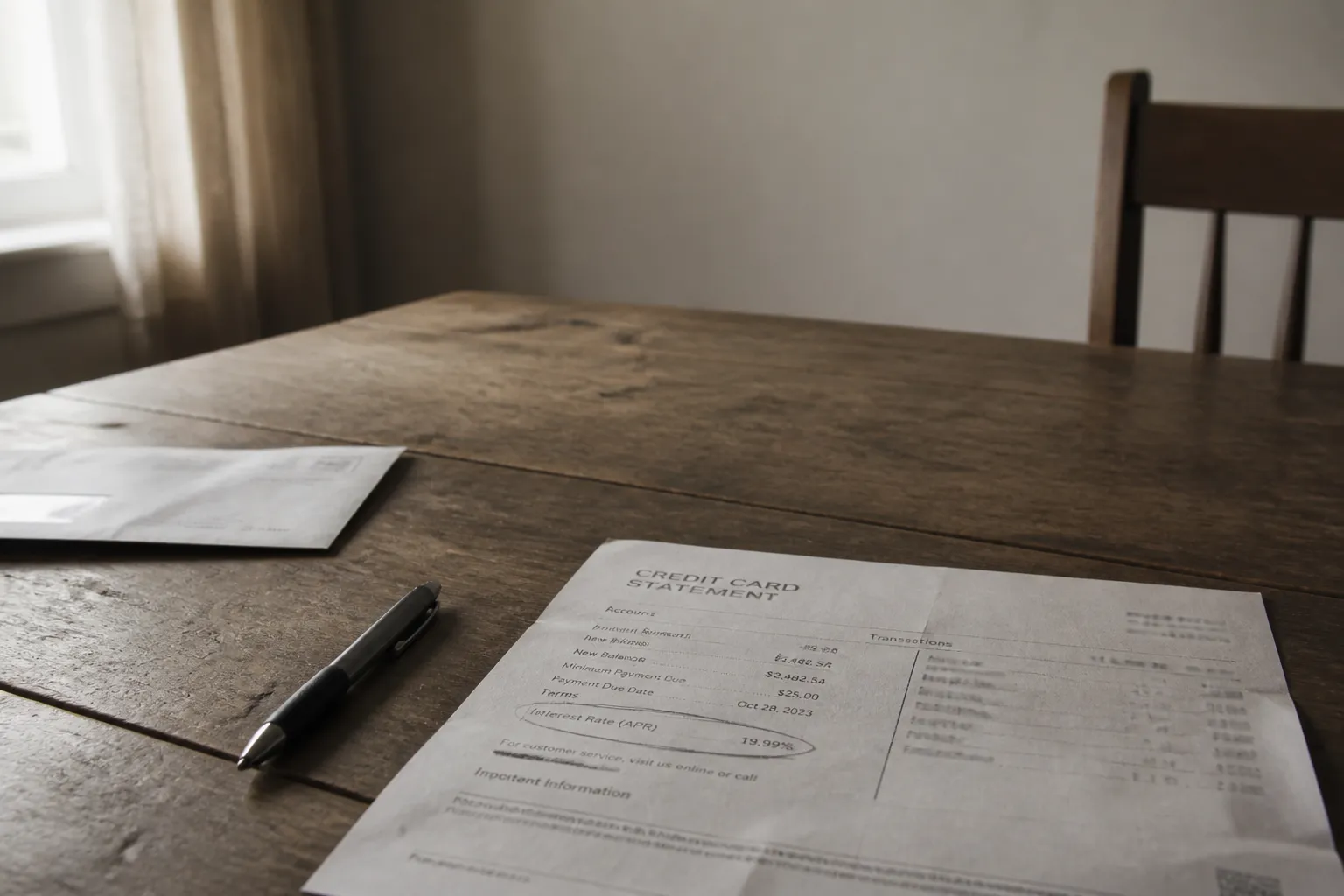
The gap can be wide. The CBS News piece says missing payments or exceeding the limit can lead to a penalty rate of 29.99% or more, depending on the issuer. It sets that against an average card rate of about 22%.
The issuer page gives a smaller, cleaner example. A standard APR of 17.9% could rise to 27.9%. That is ten points on every dollar of interest-bearing balance. The same page notes that an auto loan might carry a rate of 5% to 7%, which shows how steep card penalty rates can look by comparison.
Two details matter here. The penalty rate can apply to existing balances, not only future purchases. And it can affect new charges going forward if you do not pay the balance in full each month. So the cost can keep growing even after you have fixed the original problem. Penalty terms are also easy to miss in the fine print, which is how they surprise people.
How long it lasts and how it can end
This is where the sources run thin. The CBS News report says penalty rates may not go away quickly once they take effect. Neither source gives a fixed timeline. How long it lasts depends on the card's terms.
That leaves questions you can ask the issuer or look for in the agreement:
- What specific actions trigger the penalty APR on this card?
- Does the penalty rate apply only to new purchases, or also to existing balances?
- How long does the higher rate last once it is triggered?
Notice what the sources do not say. They do not lay out the rules for when a penalty APR must end, how to get it removed, or what notice an issuer has to give. They also skip grace periods and any step-by-step way to avoid or reverse a penalty rate. For those pieces, the card agreement and the Consumer Financial Protection Bureau's consumer materials on credit cards are the places to check. Neither was part of the sources reviewed here.
What the sources do not cover
Nothing in the material explains how a penalty APR affects credit scores or credit reports. Do not guess at that link. The credit bureaus' consumer pages and regulator guidance are better places to look, and no outcome should be promised either way.
One more limit. None of the sources cites Federal Reserve or CFPB rules on penalty APRs directly, and one of the three pages had almost no usable detail. So treat this as a starting map, not a rulebook.
This article is educational only. It is not personal financial, legal, or tax advice, and it cannot say whether a penalty rate applies to your account. Your card agreement, your issuer, and a qualified professional are the direct routes to answers about your own situation.
Please seek a professional. This article is general information, not financial, tax or insurance advice. Please seek a licensed financial, tax or insurance professional about your own situation.