










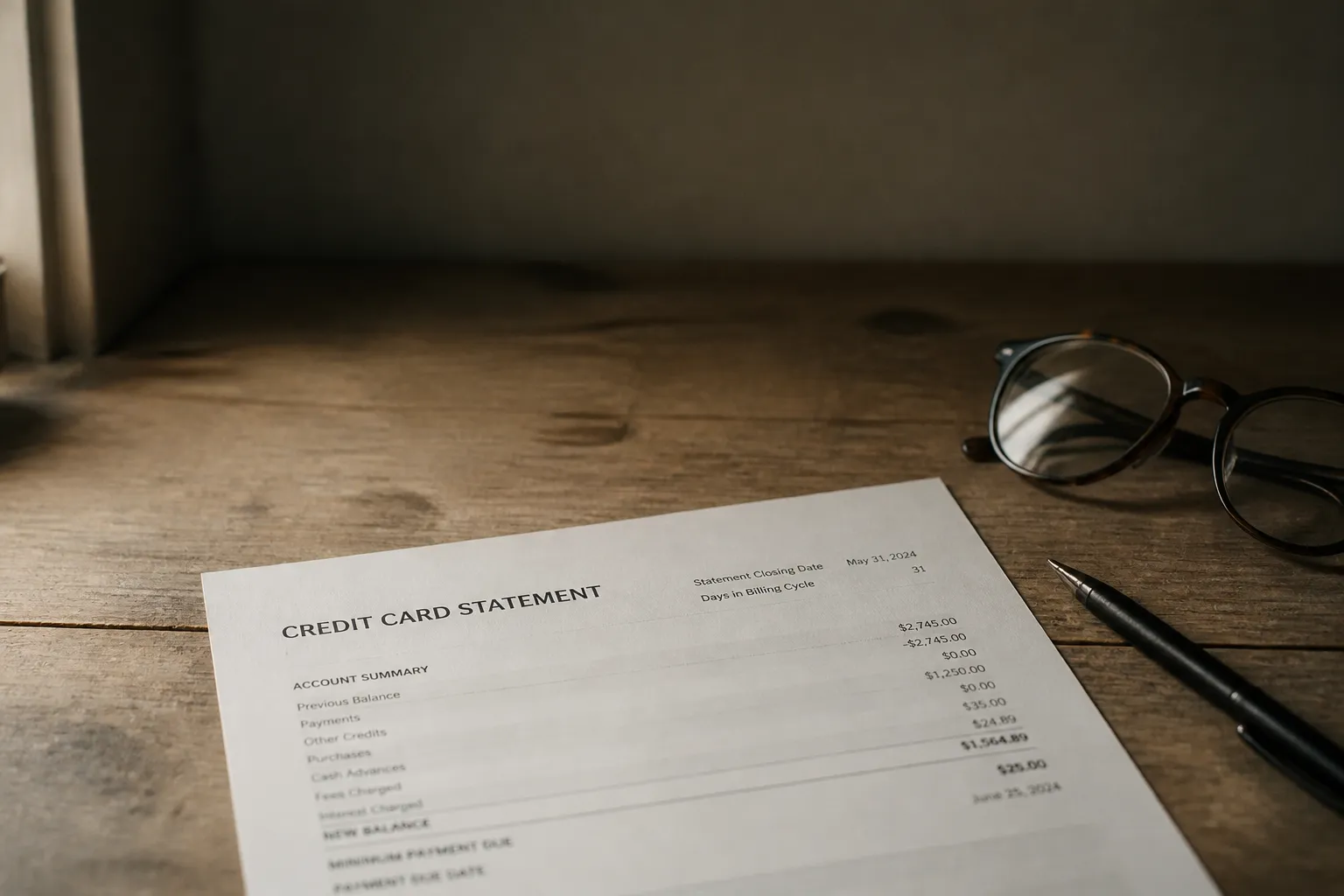
Say you owe $240 on a card, and you pay $300 by mistake. Or you return a $90 jacket after you already paid the bill in full. The next statement shows a minus sign in front of the balance. It looks odd, and a lot of people wonder if something broke. Here is what the research I reviewed can and cannot tell us about that minus sign.
What a negative credit card balance means
A negative balance, also called a credit balance, shows up when payments and credits add up to more than the charges on the card. An overpayment is the most common cause. A refund or a returned purchase can do it too. In plain terms, the issuer is holding your money. It is not debt.
That is different from a zero balance. A zero balance means you owe nothing and the issuer owes you nothing. A negative balance means the math has tipped the other way. The account can still be open and active while it shows that negative figure.
One caution. The sources I reviewed describe this only in general terms. Your statement and your issuer's cardholder agreement are the best places to see what applies to your account.
What federal rules say, and what they do not
The federal rule that deals with this is 12 CFR 1026.11, part of Regulation Z. Regulation Z is the Truth in Lending rule, and the Consumer Financial Protection Bureau (CFPB) publishes it. The section is titled "Treatment of credit balances; account termination."
The CFPB also publishes an official comment on section 1026.11. Think of it as the agency's explanation of how the rule works in practice. It is separate from the regulation text.
Here is the honest limit. The pages I could review showed the section title and a table of contents, not the full text. So I will not tell you how fast an issuer must refund a credit balance, what notices it must send, or what it must do at all. Those details need to be checked in the rule itself.
One more wrinkle. Appendix E to Part 1026 sets separate rules for card issuers that bill on a transaction-by-transaction basis. That means the treatment of a credit balance may depend on how a particular issuer bills.
Refunds, freezes, and account closure
A credit balance can sometimes lead an issuer to freeze the account. A freeze can stop new charges while the money sits there. One consumer finance article I reviewed mentions this possibility, but it does not say when or why it happens.
Many readers will want three answers. How do I ask for my money back? How long will it take? What if the issuer never pays? The sources do not say. I would rather tell you that than guess.
The sources also do not lay out when an issuer may freeze or close an account that has a credit balance, or what you can do afterward. A practical step is to contact your issuer directly. Keep written records of any request, such as the date, the amount, and who you spoke with. For your own case, official sources or a qualified professional are the right check.
Interest, credit reports, and state law
Does a credit balance earn interest? Does it change your credit score? Does it show on a credit report? The sources do not confirm any of these, so I will not claim them. Please do not trust a confident answer from anyone unless it comes with a source. No one can promise a score outcome.
Two pages that might have helped, from a credit bureau and a bank, were captured as navigation menus only. The article text was missing, so I could not rely on them. A federal access page I tried also returned nothing usable.
State law is another open question. States may have rules about credit balances and unclaimed funds, and the sources do not cover them. If your balance is large or has sat for a long time, look at your state's rules or talk with a qualified professional. This article is educational only. It is not personal financial, legal, or tax advice.
Please seek a professional. This article is general information, not financial, tax or insurance advice. Please seek a licensed financial, tax or insurance professional about your own situation.


