
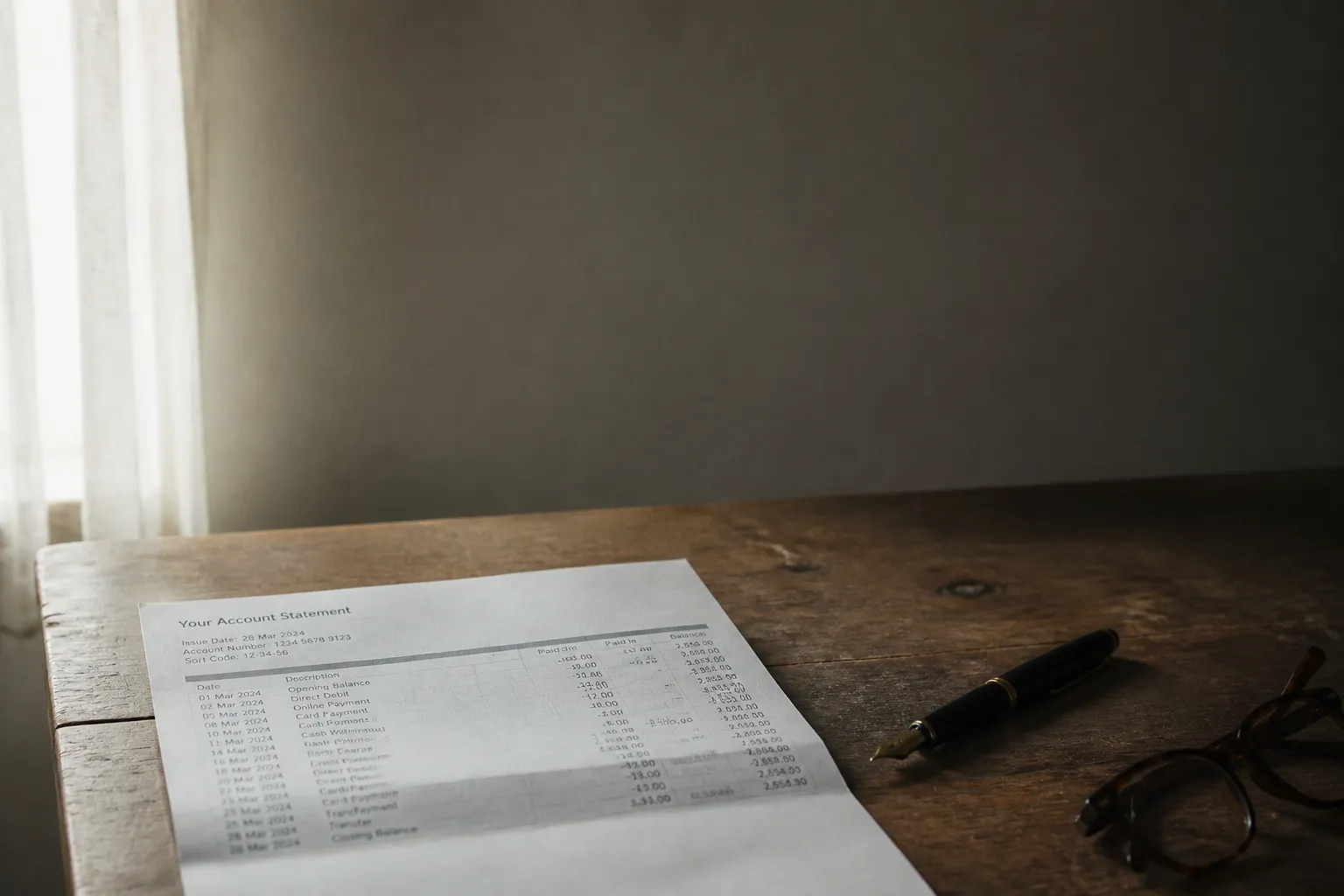
Most people read a bank statement the way they read a terms-of-service page: scroll, nod, close. That habit is cheap until it isn't. A year of statements is twelve chances to catch a charge you never made, and the federal clock for reporting one is tied to the statement itself. This piece walks through what the CFPB says about those clocks. It is general education, not advice about your account.
Why a Year of Statements Is Worth Reviewing
A monthly statement lists every withdrawal, debit card purchase, ATM transaction and automatic payment. One month shows you one slice. Twelve show you patterns: the subscription that quietly renewed, the small recurring debit you forgot, the odd charge that appeared once in March.
The date matters more than most people expect. The CFPB ties one key deadline to the statement that shows the transaction. So the statement date is your reference point, not the day you happened to notice. Check your own account agreement, and ask your bank or credit union if anything is unclear for your situation.
Electronic Transactions and Your Federal Protections
The CFPB describes electronic fund transfers as ATM transactions, debit card purchases, some online bill payments, and automatic payments pulled from a checking or savings account. Federal protections may apply to these. That means an entry you did not make or allow has a defined process behind it.
One caution. The material reviewed here does not say how these timelines apply to credit cards. Credit cards fall under different federal rules. Do not assume the same deadlines carry over. Look up the rules for each card you hold.
Timelines for Reporting an Unauthorized Transaction
An unauthorized transaction is a charge or withdrawal you did not make or allow. Once you notify your bank or credit union, it generally has ten business days to investigate. If it finds an error, the CFPB says it must correct it within one business day. Then it has three business days to report its findings to you.
Notice the starting gun. The investigation clock runs from your notice, not from the date of the charge. So write down when you reported, how you reported, and who you spoke with. Here is the sequence in order:
- You spot the charge and notify the institution.
- The institution generally has ten business days to investigate.
- If it finds an error, it corrects it within one business day.
- It then has three business days to tell you what it found.

Liability Limits and the Cost of Waiting
Waiting has a price, and the CFPB puts numbers on it. Here is the arithmetic for a lost or stolen debit card and for unauthorized withdrawals:
- Report a lost or stolen debit card within two business days of discovering the loss: your liability is capped at the lesser of the unauthorized amount or $50.
- Report after two business days: you could be responsible for up to $500.
- Report an unauthorized withdrawal within 60 days of the statement that shows it. After that, you could be liable for the full amount of later unauthorized transactions made before you notify the bank.
Do the math on a $300 fraudulent charge. Report in time and you owe at most $50. Wait too long and the exposure climbs toward $500. Ignore the statement for months and the later charges can land on you in full. A monthly read is the cheapest insurance on that list.
What the Sources Do Not Yet Cover About Bank Fees
The title promises fees, so here is the honest gap. The sources I could use do not list which fees to hunt for, such as monthly maintenance, overdraft, non-sufficient funds, ATM or foreign transaction fees. They do not explain how to sort them on a statement either.
Two guides were of no help on this point. A CFPB fee-avoidance worksheet was unreadable in the material provided. An FDIC page on overdraft and account fees showed only navigation and headlines. So nothing here covers overdraft opt-in rules, fee comparisons, refund requests, what to do after a denied dispute, or where to file a complaint. Check current CFPB and FDIC pages for those, or ask a qualified professional.
Turning the Review Into a Habit
Keep it dull and repeatable. Each month, compare the statement to what you remember buying. Mark anything unfamiliar with its date and amount. Act on it right away, since the federal windows do not wait for your annual cleanup.
Once a year, lay the twelve statements side by side and group the recurring items. Fees tend to show up as repeats, and repeats are easy to total once they sit together. Then confirm reporting rules and deadlines directly with your bank or credit union. This is general education, not advice about any particular account.
Please seek a professional. This article is general information, not financial, tax or insurance advice. Please seek a licensed financial, tax or insurance professional about your own situation.