










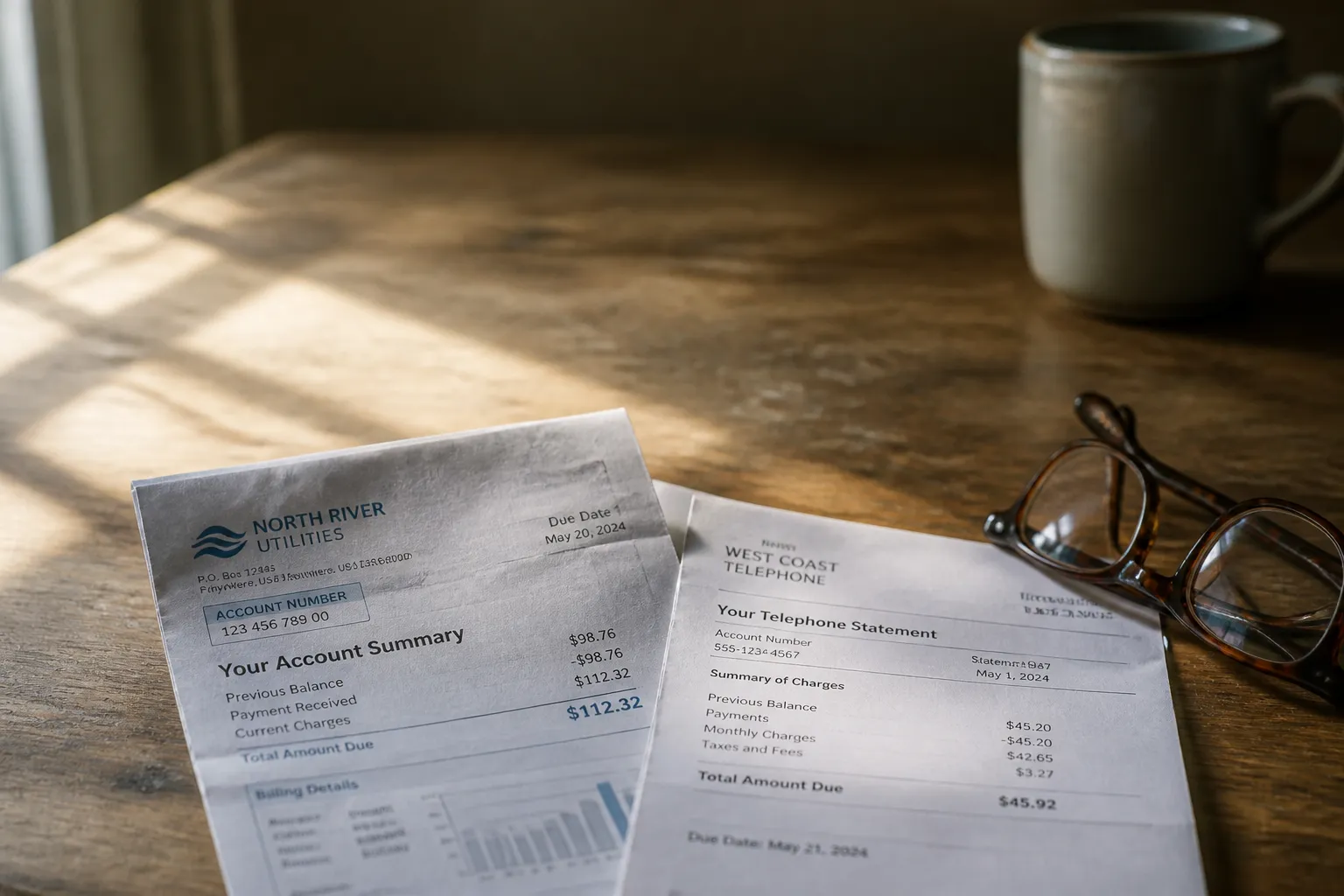
Utility and phone companies may check consumer-reporting records when you ask for service. Some account information can also be shared among companies. The sources reviewed here do not give a time limit for how long an unpaid utility or phone bill stays on a report, so this article does not offer a number of years. It does explain where a bill can land, who can look at it, and how to check your own file.
Two questions hiding in one
When people ask how long a phone or power company can use their credit, they often mean two different things. One is who may pull a report. The other is how long information about an account stays in a file. The Fair Credit Reporting Act, or FCRA, governs the first question. It limits who may obtain a consumer report and for what reasons.
A consumer report is not only the file most people call their credit report. Opening service can also create a record in a specialty database used by participating utility and telecom companies. That database is separate from the files held by the three nationwide credit bureaus. A record in one system does not automatically show up in the others.
Who can pull your credit and why
The FCRA allows access to consumer reports only for permitted purposes. A consumer-initiated business transaction, such as applying to open a utility account, is one example. A company should not pull a report out of curiosity. One private vendor's summary of these rules is on the Soft Pull Solutions blog. It is not a regulator source, so check the statute or the CFPB for the exact rules, including when written authorization is needed.
If you do not recognize an inquiry, ask the company what service or application it relates to and which reporting company it contacted. Compare its answer with what you gave on your application. A request tied to an application is different from a pull with no clear business reason.

What can reach the major bureaus
The Consumer Financial Protection Bureau, or CFPB, says most utility companies do not give the three nationwide credit bureaus data on whether or how regularly customers pay on time. So an ordinary on-time electric, water, phone or cable payment usually does not show up the way a credit-card payment does. The CFPB explains this in its utility-bill credit report guidance.
An unpaid bill can take a different path. If it goes to a collection agency, the CFPB says it will most likely appear on reports from any of the three nationwide companies. That is the key difference between routine payment history and a collection account. The CFPB page does not say how long the collection stays on a report.
What the NCTUE file covers
The National Consumer Telecom & Utilities Exchange, or NCTUE, is a specialty consumer reporting company. The CFPB says it shares information among more than 60 member telecom, pay-TV and utility companies. Its database can hold new service connection requests and account histories for telecom, pay TV, and electric, gas and water service. Those histories can include accounts paid as agreed, past-due accounts, delinquencies and charge-offs.
A member may use that information to decide whether to ask for a deposit before starting service. So a specialty file can matter even if nothing appears at a nationwide bureau. Equifax Information Services manages the database as a contracted servicer, but the CFPB says Equifax is not itself a member. The CFPB's NCTUE page describes the file and how to request it.
How to check and dispute a record
You may request one free NCTUE report every 12 months. The CFPB says companies required to provide free annual reports must do so within 15 days of receiving the request. Asking for your own reports does not hurt your credit scores. NCTUE also says it can freeze your consumer report if you ask.
If an entry looks wrong or incomplete, you have the right to dispute it with the reporting company and with the company that supplied the information. For a phone or utility account, that may mean writing to both NCTUE and the provider. The CFPB says companies must conduct a reasonable investigation of disputed information free of charge. The source text is cut off before the full dispute process, so check current CFPB guidance for the steps and timeline.
When you review a file, note the company name, account details, dates and the exact item you think is wrong. Keep copies of what you send and what you get back. This is a way to stay organized. It does not guarantee how a dispute will turn out.
What the sources do not settle
The biggest open question is how long an unpaid utility or phone debt stays on a report. The sources reviewed do not state a period, and the pages from the FTC, Experian and Equifax could not be read. They also do not say whether utility inquiries affect credit scores, how often reports update, or how state rules on deposits and collections apply. For your own account, ask the provider which reporting company it uses, then request that company's file.
Please seek a professional. This article is general information, not financial, tax or insurance advice. Please seek a licensed financial, tax or insurance professional about your own situation.


