










A credit report can look like a wall of names, dates, balances, and unfamiliar codes. Read it in passes. First find the major sections. Then return to each line and ask a narrower question: Is this information mine, and is it accurate? Keep your own statements or payment records nearby for comparison.
First, find the four parts of the report
A credit report records information collected by a credit reporting company. Scores are generally calculated from information in these reports, but a report does not tell you exactly how any one line will affect a score. The three major reporting companies, Equifax, Experian, and TransUnion, may receive different information and use different labels. Read each report separately rather than assuming they match.
- Identifying information: Find your name, addresses, Social Security number, and any other details used to identify you.
- Account history: Locate active and closed accounts. This section shows information reported by lenders and other businesses, including balances and payment history. A report-reading guide from University of Wisconsin-Madison Extension describes account history from the past seven years.
- Public records: Look for a separate section that may include bankruptcies.
- Inquiries: Find the list of organizations that requested access to your report.
Check the identifying details
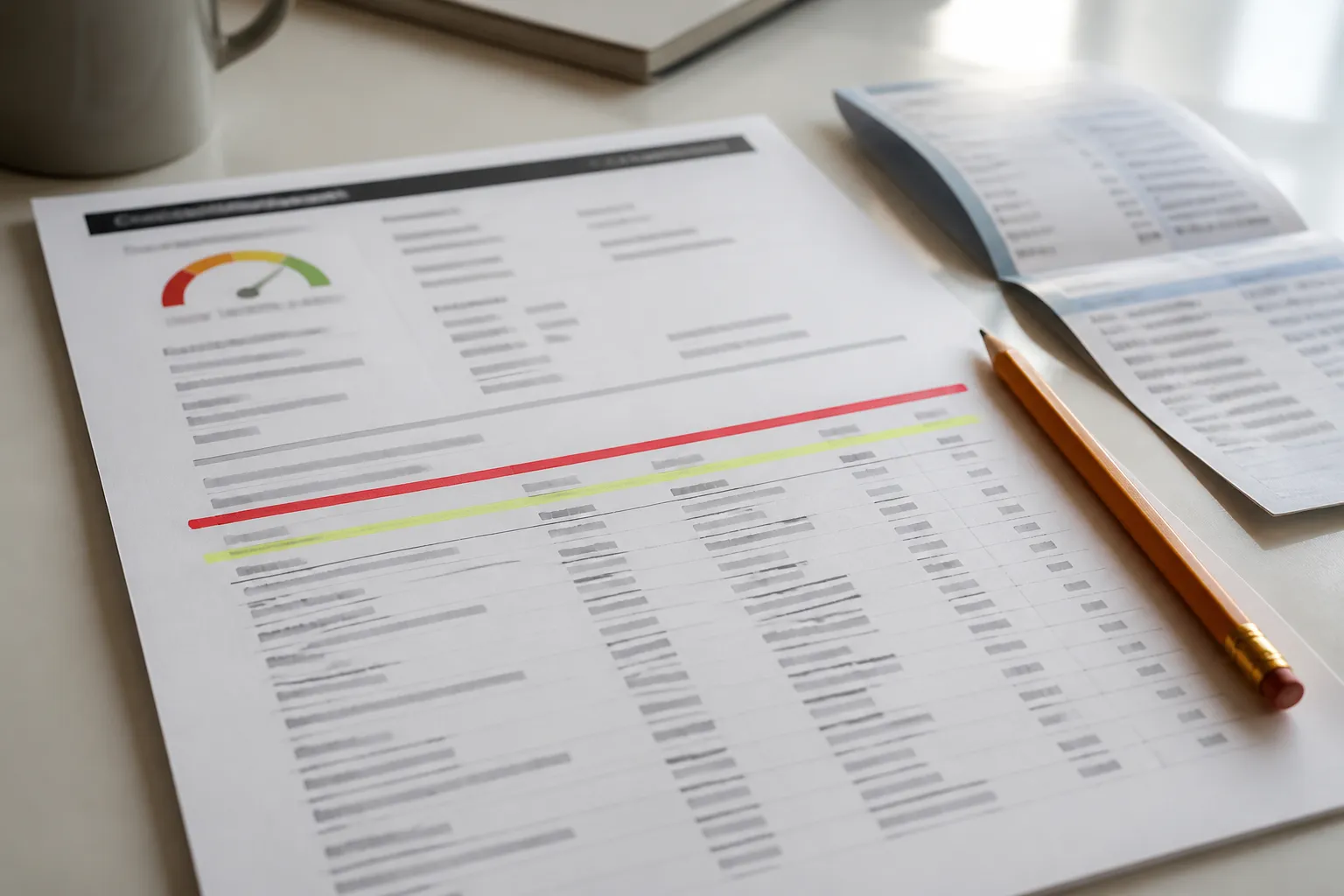
Start at the top of the report. Do the name and current address belong to you? Former addresses may be familiar even if you have not lived there for years. A typo or unfamiliar address is worth noting, but a mismatch alone does not establish fraud. Check any Social Security number shown with particular care. If the report lists an employer or address you do not recognize, write down the exact entry before investigating it.
- Compare your name and addresses with your own records, including any former names or addresses you recognize.
- Note any identifying number, employer, or address that appears to belong to someone else.
- Record which reporting company issued the report. The same detail may appear differently, or not at all, on another company’s report.
Read each account as its own record
Now move through the accounts one at a time. Ask first: Do I recognize this account? Then compare the creditor name and account number with your records. Some reports may display only part of a number, so use the other details to help identify the account. An account that does not belong to you deserves prompt attention, especially if other unfamiliar information appears alongside it.
For an account you recognize, check the balance, credit limit, and high credit amount. The high credit amount means the highest amount used on that account; it is not necessarily the amount owed today. Next, read the payment history month by month. If a payment is marked late, compare the marked month with a statement or payment confirmation. According to the Consumer Financial Protection Bureau, payment history and how close an account is to its credit limit are among the information scoring formulas may consider. That makes accurate account details worth checking, without assuming a correction will produce a particular score change.
Finally, inspect dates and status. Is the date of last activity plausible? If an account shows a charge-off, meaning the creditor treated the debt as unlikely to be collected, is its date accurate? Is the account marked open or closed as expected? Note blank or missing fields that make an entry hard to understand. Reports can use short codes for status or payment history. Before interpreting one, consult that reporting company’s explanation of its terms.
Read public records and inquiries separately
A bankruptcy entry belongs in the public-records section, not among the ordinary account lines. If one appears, check that it relates to you and that its identifying details are accurate. Do not skip a section just because you do not expect it to contain anything. A quick look confirms what the report actually shows.
Inquiries identify organizations that asked to see the report. Look at each name and date. Do you recognize a credit application around that time? An unfamiliar inquiry is a reason to investigate, not proof that someone applied in your name. Different kinds of inquiries can be treated differently in scoring, so do not assume every entry has the same effect. Requesting your own report does not hurt your credit score, according to the CFPB.
Keep notes and use official sources for the next question
Make a simple record as you go: the reporting company, the section, the exact entry, and the record you used to check it. Mark an item as confirmed or needing follow-up. That is more useful than relying on a general impression that the report looked wrong. Reviewing your reports at least once a year can help you spot errors you might otherwise miss.
For free reports, use official channels such as AnnualCreditReport.com or the reporting companies’ consumer pages. Be cautious of an ad suggesting you must buy something to see your report. If you find an error or signs of identity theft, consult the CFPB or Federal Trade Commission for the steps that fit your situation. This reading guide is educational; it does not cover dispute deadlines, every legal right, or how a particular correction might affect a score. A qualified professional can help with questions specific to your circumstances.
Please seek a professional. This article is general information, not financial, tax or insurance advice. Please seek a licensed financial, tax or insurance professional about your own situation.


