











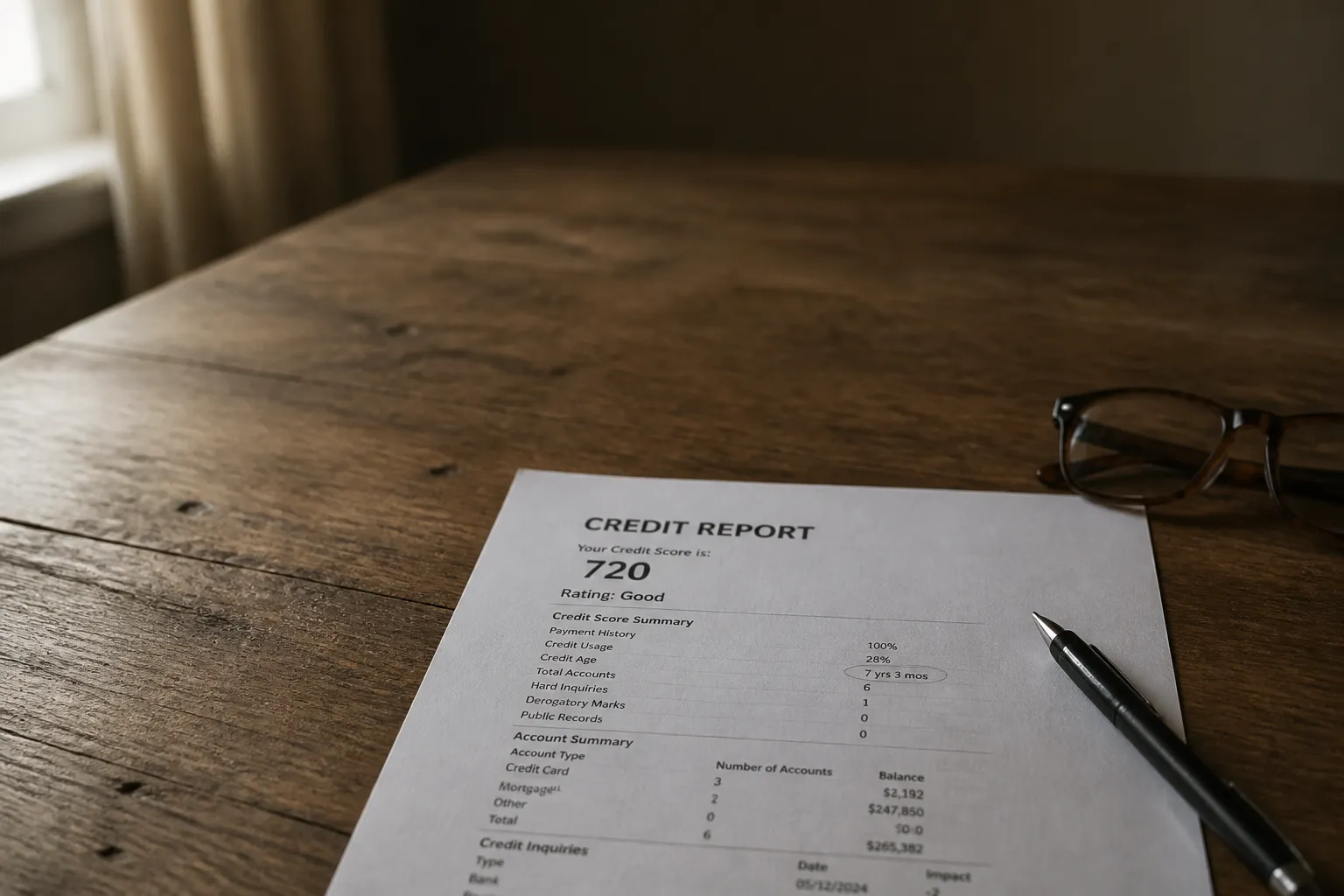
A credit report dispute is a way to challenge information that is wrong, belongs to someone else, appears more than once, or cannot be verified. It is not a way to erase an accurate late payment or collection account because it makes a credit history look bad. Knowing which kind of problem you have can help you focus your dispute on facts that can be checked.
What a dispute can remove
A dispute can address information that is inaccurate or not yours. That might include an account with a balance or payment history reported incorrectly, a debt you never opened, or another person’s account that has ended up in your file. A credit report file containing details from more than one person is sometimes called a mixed file. If an account resulted from identity theft, that is also a reason to dispute it.
You can dispute errors with the three nationwide credit reporting companies, Experian, Equifax, and TransUnion, and with the company that supplied the information. That supplier is often called a furnisher. The Consumer Financial Protection Bureau (CFPB) advises contacting both. The reporting company can investigate what appears in your report, while the furnisher can check its own records and correct information at its source.
A duplicate entry can also be challenged. For example, if the same account appears twice, explain why you believe the entries are duplicates and identify both. The goal is to correct the report, not to remove a separate, accurate account simply because it has similar details.
The Fair Credit Reporting Act, or FCRA, is the federal law that sets rules for credit reporting. It requires credit reporting companies and information providers to respond appropriately to disputes about errors. The CFPB has also described the importance of removing information that cannot be verified after a dispute. Its account of a court filing on that issue is an agency legal argument, not a complete guide to every case or outcome.
What a dispute cannot remove
Accurate negative information generally cannot be removed just because it is unfavorable. If a late payment happened and is being reported correctly, disputing it only because it hurts your credit history does not make it an error. The same basic distinction applies to a correctly reported collection account.
Most negative information generally remains on a credit report for seven years, while some types can stay longer. The period depends on the kind of information and the applicable rules. The CFPB source cited here does not give the time limit for every item, including bankruptcies, so check current official guidance for the specific type of record. A dispute is not a way to shorten the reporting period for information that is accurate.
Be cautious of anyone who promises to remove current, accurate negative information. The CFPB warns that such promises can be a sign of a credit repair scam. You have the right to dispute report errors yourself, generally at no cost, and you do not have to pay a third party to send a dispute on your behalf. A dispute also cannot promise a particular credit score result. The available guidance does not say whether removing a specific item will change a score or by how much.
How to prepare a clear dispute
Start by getting the report and identifying the exact entry you believe is wrong. Write down what is inaccurate and why. A specific explanation helps distinguish a factual disagreement from a request to remove information simply because it is negative. For example, point to the account, the field that is incorrect, and the record or document that supports your explanation.
The CFPB’s dispute guidance suggests including identifying details, the report confirmation number if available, the account number for each item, and a copy of the report section with the disputed information marked. Include copies of supporting documents, not originals, and state whether you are asking for a correction or removal. Keep a copy of the letter and everything sent. If you mail it, certified mail with a return receipt can provide a record that it arrived.
- Identify the report entry and describe the error in plain language.
- Include relevant account details and supporting documents.
- Ask for a correction or removal that matches the problem.
- Keep copies of the dispute and any mailing receipt.
Send a dispute to the credit reporting company or companies showing the error, and contact the furnisher too. The process and timing for a dispute sent directly to a furnisher can differ from the bureau process, and the cited guidance does not provide a full timeline for furnisher-only disputes. Ask the furnisher how it accepts disputes and keep a record of what you send.
If an unfamiliar account may involve identity theft, the standard report dispute can be paired with a report through IdentityTheft.gov, the federal resource for reporting and recovering from identity theft. That can help document the identity theft issue as well as alert the relevant companies.
Timelines and what happens next
A credit reporting company generally has 30 days from receiving a dispute to investigate. It generally must notify you of the results within five business days after the investigation is complete. In some circumstances, an investigation can take up to 45 days, including when you dispute information after receiving your free annual credit report. If you send additional relevant information during the first 30 days, the investigation can be extended by 15 days. The CFPB explains these timing rules in its overview of dispute investigations.
After the investigation, you should receive written results and an updated report. That updated report does not count as your free annual report. If a furnisher corrects information after a dispute, it must send the correction to each credit reporting company that received the incorrect information.
If the result does not resolve the issue, the CFPB accepts complaints about credit reporting companies and forwards them to the company. Its complaint route is one place to raise a problem, but the source guidance does not spell out every next step for every dispute. Check the CFPB’s current instructions or consult a qualified professional for guidance about your own circumstances. Keep the written result and your dispute records together, so the item, the explanation, and the company’s response are easy to review.
Please seek a professional. This article is general information, not financial, tax or insurance advice. Please seek a licensed financial, tax or insurance professional about your own situation.


