











A first budget is easier to build than most people expect. You can start with something you already have: your bank and credit card statements. Those records show what came in and what went out over the last few months, which makes them a better starting point than your best-case spending plan.
Start With Your Current Spending
Before you pick a method or an app, look at how money actually moves through your accounts. The Consumer Financial Protection Bureau (CFPB) suggests reviewing your checking account and credit card history for several recent months. That gives you a picture of your normal life.
The CFPB also suggests drawing up an as-is monthly budget, which reflects what you spend today. Add a miscellaneous category too. Small purchases, like a coffee or a parking fee, add up fast, and a budget that leaves them out will feel wrong by the second week.
Without this starting picture, it is hard to tell whether you will have anything left over to save. A plan built on hope tends to break at the first surprise bill.
List Every Source of Income
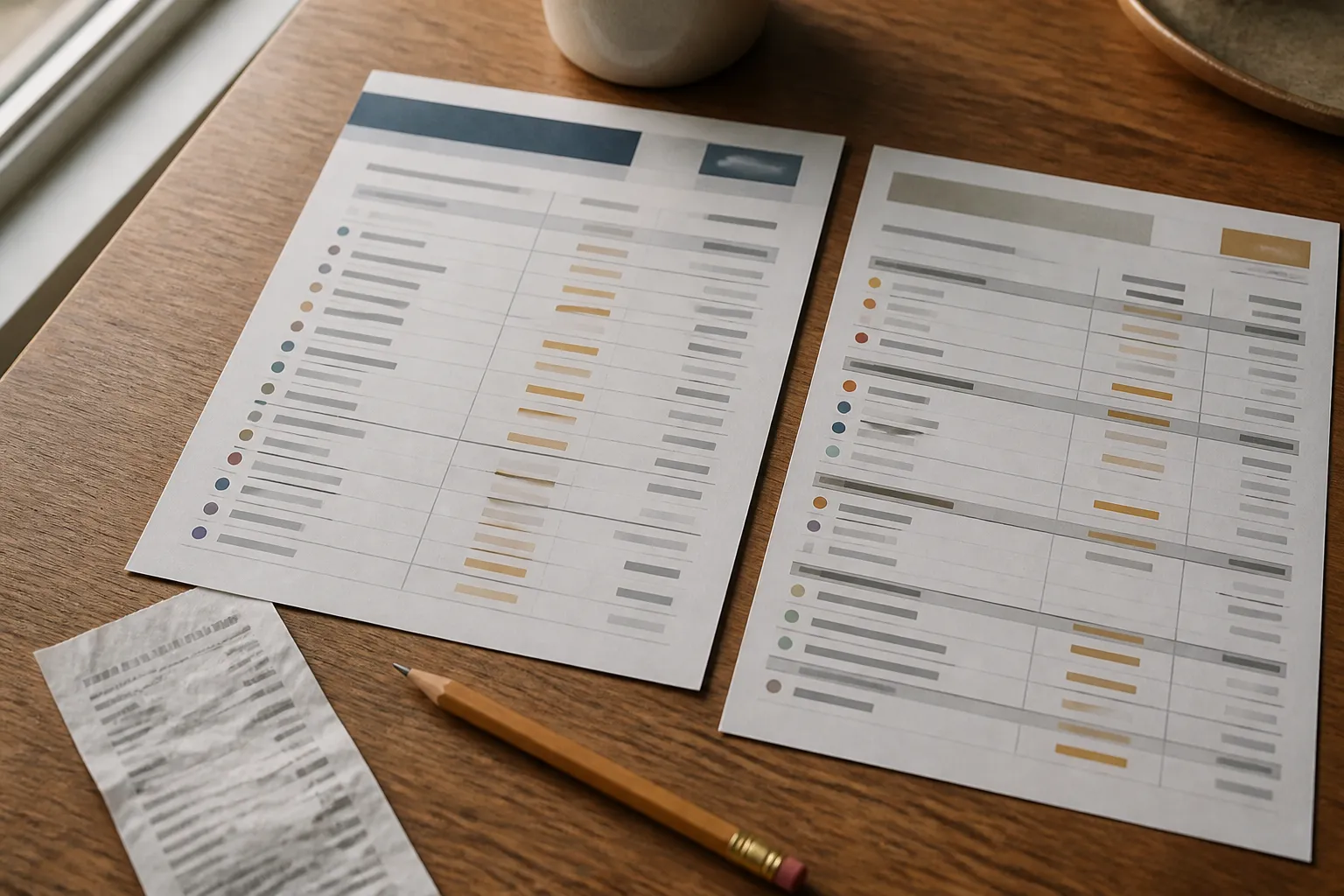
Next, estimate what comes in each month. Include every source. That can mean a regular paycheck, self-employed or gig income, a second job, child support, or government benefits. If a source is missing from your estimate, your plan will look roomier than it really is.
The Oregon Division of Financial Regulation offers a simple example in its guide to creating a personal budget. Two paychecks of $1,500 each produce estimated monthly income of $3,000. The same method works for any mix of income: add up each source, then total them.
Variable pay needs more care. If your paychecks change from one pay period to the next, estimate conservatively and plan around the lower end of your usual range. When a smaller check arrives, you will already have a plan for it.
An income tracker can help here. Record each deposit as it arrives, so your estimate reflects real deposits instead of memory. Memory tends to round up.
Sort Spending Into Categories
Once you have your statements, group each transaction into categories. Common ones include housing, utilities, groceries, eating out, transportation, and entertainment. Sorting shows where most of your money goes, and many people are surprised by at least one category.
Start with fixed expenses. These are costs that stay about the same each month, such as rent or a loan payment. They are the most predictable, so estimate them first. Variable costs like dining out or shopping come next. Use your recorded history to estimate those.
The CFPB's spending tracker can help with the sorting. If the task feels like too much, start small. Review one week at a time. A single week is manageable, and it builds the habit.
You have several ways to record spending. You can review bank and credit card statements, save receipts and total them weekly or monthly, or keep a small notebook and write down every expense. Pick the method you will actually keep up with.
Your bank or credit union may offer a personal financial management tool that labels transactions automatically. Check those labels against your own records. Automatic categories are not always accurate, and a coffee shop may land in the wrong bucket.
Compare, Adjust, and Keep Going
Compare your estimated income and expenses with what actually happened. The gap shows which categories need a closer look. If dining out came in well above your estimate, that is useful information for the next version of the plan.
Then adjust. A budget is a written plan you revise as your income, costs, and goals change. Review it after a change in pay, a new bill, or a shift in priorities. The steps below can help you run the cycle again.
- Estimate monthly income from every source.
- Sort recent spending into categories, starting with fixed costs.
- Add a miscellaneous category for small or unplanned purchases.
- Compare the estimate with actual results.
- Adjust the plan and review it on a regular schedule.
Active duty servicemembers can consult their installation's personal financial manager (PFM) for help with this step.
What These Sources Do Not Cover
The guidance behind this article is general. It does not walk through reading individual bank statement line items in detail. It also does not explain how to handle irregular bills, such as insurance premiums, vehicle registration, or holiday spending. Those costs can throw off a first budget if you forget them, so give them their own planning step.
The sources also do not give a recommended savings target or a method for setting an emergency fund amount. They do not explain how budgeting connects to credit reports, credit scores, or debt repayment. If those topics matter to you, check official resources from government agencies or talk with a qualified professional about your own situation.
This article is educational only. It is not personal financial, legal, or tax advice. Your statements are the best place to start, and an honest first pass is more useful than a perfect one.
Please seek a professional. This article is general information, not financial, tax or insurance advice. Please seek a licensed financial, tax or insurance professional about your own situation.


