










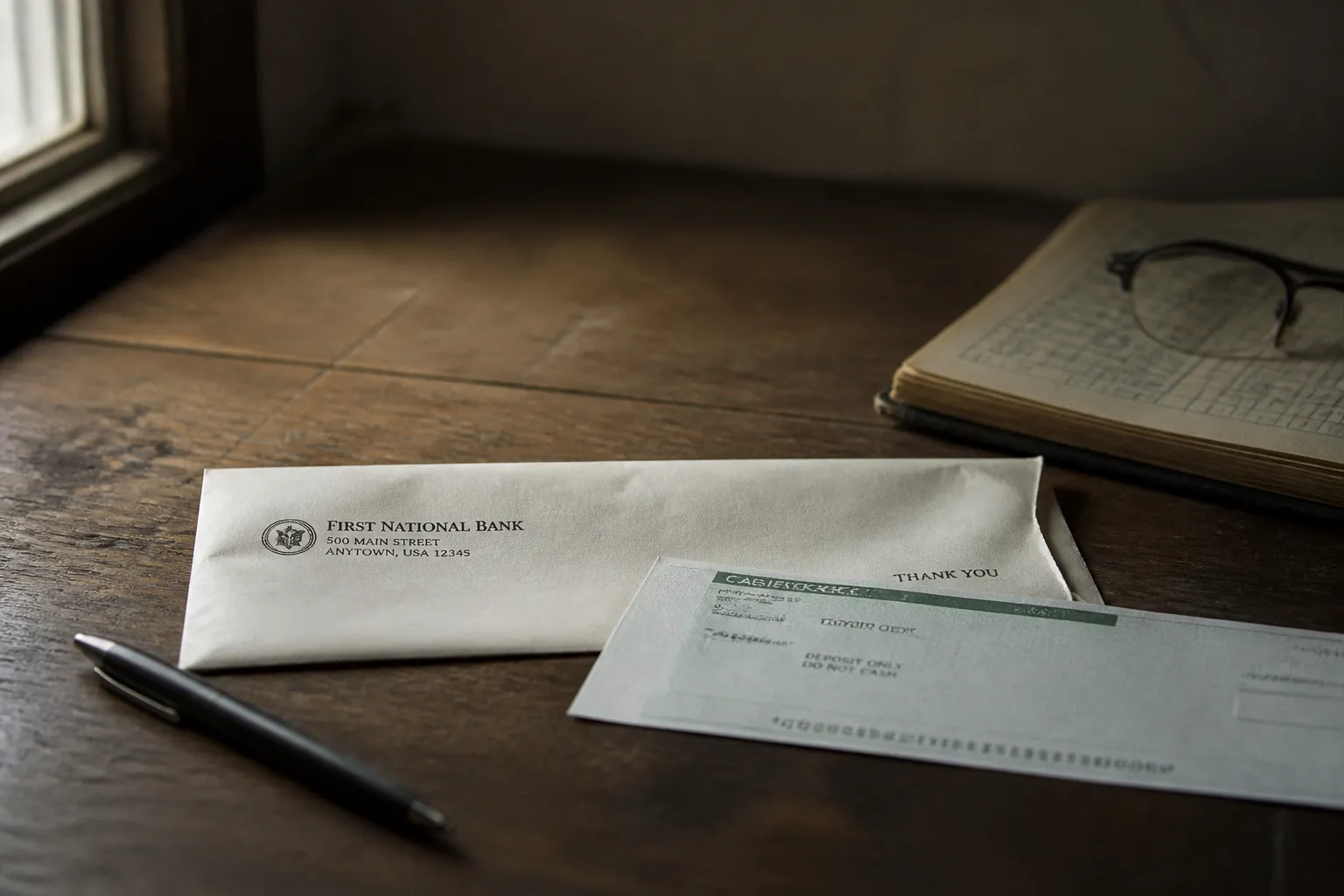
A cashier's check feels like cash with a bank's name on it. That reputation is exactly why scammers use it. Here is how these checks work, why your bank usually cannot stop one once it is issued, and what to confirm before you spend a dollar of the money.
What a cashier's check is
A cashier's check is drawn directly on the bank that issues it. It is not written on your personal account. When you buy one, the bank takes the money from your account and becomes the party that owes the payment. That structure is why many people trust it more than a personal check. The bank itself stands behind the check, not just the person who bought it. You can read the official explanation on the Cashier's Checks help page from the federal government.
Trust in the bank's name is useful, but it can also make people careless. A check can look official and still be fake. Keep that idea in mind as you read the rest of this piece.
Why a bank usually cannot stop one
With a personal check, you can often ask your bank to stop payment. With a cashier's check, that option is usually gone. Because the bank is the drawer, a customer generally cannot order a stop payment on it. The bank must honor the check when it is presented for payment. The stop payment guidance explains this in plain terms.
If your cashier's check is lost, stolen, or destroyed, or if you think it is fraudulent, call the issuing bank right away. Speed gives the bank the best chance to respond. A bank that issues a replacement for a lost check may require an indemnity bond for the full amount. An indemnity bond is a type of insurance policy that protects the bank if the original check turns up and gets paid. The sources do not explain what such a bond costs or how to get one, so ask the bank directly if you ever face that situation.
How the fake check scam works
Most cashier's check fraud is really a fake check scam. The typical story goes like this. Someone you do not know sends you a check for more than you are owed. Then they ask you to send some of the money back, often by wire transfer or gift card. You deposit the check, withdraw cash, and send the difference. Later the check turns out to be bad, and you owe the bank the full amount. The Federal Trade Commission describes this pattern in its guide to spotting fake check scams.
Scammers usually have a believable reason for the overpayment. They may say they are stuck out of the country, need you to cover taxes or fees, or need you to buy supplies before a job starts. These stories often sit alongside phony job offers and online classified ad sales. The FTC reported that in 2019, consumers lost more than $28 million to fake check scams, with a median loss of $1,988. That median was more than six times the median loss across all frauds the agency tracked that year. Young adults were also more than twice as likely as people 30 and older to report losing money to these scams.
Counterfeiters have better tools than ever. The U.S. Postal Inspection Service warns that scammers can use sophisticated software, commercial laser printers, scanners, and blank check stock to make fake checks that look convincing. A professional layout and a familiar bank logo do not prove a check is real. Only the issuing bank can confirm that.
Why the money in your account is not final
Money can show up in your account long before the check is actually settled. The FTC notes that deposited funds are often available within a day or two. It can take weeks, though, for the bank to learn that a check is bad. During that gap, it is easy to assume the money is yours to spend. When the check fails, the loss lands on you.
Federal bank deposit rules, as described on the Cashier's Checks help page, generally require a bank to make funds from a cashier's check deposited in person available by the next business day, subject to some conditions. Availability is not the same as final payment. A bank may still place a hold on a check that later proves fraudulent, and you can end up owing the bank.
Banks do not absorb these losses. The Postal Inspection Service is clear that you are responsible for funds you deposit and withdraw. That is the main reason to verify a cashier's check before you act on it, not after.
Checks to run before you spend
Start with one rule. Treat any check from someone you do not know who asks you to send money back as a warning sign. A real overpayment is unusual. A request to return part of a payment by wire or gift card is a common feature of fraud.
Next, confirm the check with the issuing bank before you spend or send anything. Use a phone number you find yourself, such as the number on the bank's official website or on a past statement. Do not use a number printed on the check or one the sender gave you. The sources do not lay out a step-by-step verification process, so this is a reasonable starting point. You can ask the bank what it recommends.
Then ask yourself a few direct questions:
- Did the bank confirm the cashier's check is genuine before I spend or send any of the money?
- Am I being asked to send money back for an overpayment?
- Have I confirmed how long the bank will hold funds from this deposit?
If any answer is unclear, wait. A delay costs you a few days. A bad check can cost you the full amount, plus any cash you already sent. Also watch for offers that promise easy money for depositing checks and forwarding part of them. The Postal Inspection Service flags those as a clear sign of trouble.
This information is educational and does not replace advice from a bank or a qualified professional about your own situation. For questions about a specific check, contact the issuing bank directly.
Please seek a professional. This article is general information, not financial, tax or insurance advice. Please seek a licensed financial, tax or insurance professional about your own situation.


